What Is European Hair? Why It Matters for Fine Hair Extensions
European hair is a technically distinct category with measurable structural properties that make it the best choice for fine-hair extension clients. This guide explains what European hair actually is, how it differs from other Remy human hair, and why those differences matter.
When a hair extension brand says its hair is "European," it is making a specific claim about the origin, structure, and quality of the hair fiber. For most clients and even many stylists, the term gets used interchangeably with "premium" or "luxury" — but European hair is a technically distinct category with measurable differences that matter most for one specific client: the person with fine, naturally thin hair. This guide explains what European hair actually is, how it differs from other Remy human hair, and why those differences translate into a meaningfully better result for fine-hair extension clients.
What Is European Hair?
European hair refers to human hair sourced from donors of European descent — primarily from Eastern Europe, where donors in countries such as Russia, Ukraine, and the Czech Republic have historically supplied the premium extension market. The defining characteristic is not geography alone, but the structural properties that result from the genetics of European hair donors: a finer strand diameter, a naturally round cross-section, and a cuticle layer that is thinner and more uniform than hair from other ethnic origins.
These structural properties are not cosmetic. They determine how the hair behaves on the head, how it responds to heat and color, and how it integrates with the natural hair of clients who have fine, straight, or naturally thin hair. European hair is not better than other hair types in an absolute sense — it is specifically better suited to a particular client profile.
European Hair vs. Asian Hair: The Structural Difference
The majority of human hair used in the extension industry is sourced from Asia — primarily India, China, and Vietnam — because of the volume of available donors and the lower cost of collection. Asian hair is structurally different from European hair in three measurable ways:
Strand diameter. Asian hair has a larger strand diameter, typically 70–80 microns. European hair has a finer strand diameter, typically 50–70 microns. For a client whose natural hair is 50–60 microns in diameter, Asian hair extensions will feel noticeably thicker and coarser at the attachment point and throughout the length.
Cross-section shape. Asian hair tends to have a more oval or elliptical cross-section, which contributes to its characteristic slight wave or texture. European hair has a rounder cross-section, which produces straighter, silkier behavior and a lighter, more fluid drape.
Cuticle structure. European hair has a thinner, more uniform cuticle layer. This makes it softer to the touch, more responsive to color and chemical services, and less prone to the coarse texture that can develop when a thicker cuticle is processed.
For clients with medium to coarse natural hair, these differences may be imperceptible — the extension hair blends well regardless of origin. For clients with fine, straight, or naturally thin hair, the difference is significant and visible.
Why European Hair Matters for Fine Hair Clients
Fine hair clients face a specific challenge with hair extensions: the extension hair must match not just the color and length of the natural hair, but also its weight, texture, and movement. When extension hair is structurally heavier than the natural hair it is blending with, the result is a visible line of demarcation — a point where the extension hair begins that looks and feels different from the natural hair above it.
European hair solves this problem at the structural level. Because its strand diameter is closer to the diameter of naturally fine hair, it blends more seamlessly at the attachment point and throughout the length. The lighter weight also means less stress on the natural hair at the attachment — a critical factor for fine-hair clients who are working with less anchor hair to support the extension load.
The practical benefits for fine-hair clients are:
- More natural movement. Lighter, finer extension hair moves with the natural hair rather than pulling it down or creating a stiff, heavy section.
- Better blending at the root. Finer strand diameter means less visible contrast between the natural hair and the extension hair at the attachment point.
- Less tension on fine strands. Lighter extension hair places less load on the natural hair at the bead or bond attachment, reducing the risk of traction over time.
- More predictable color results. The thinner cuticle layer of European hair accepts color more evenly and predictably — important for fine-hair clients who often need the extension hair toned or colored to match their natural shade.
What "100% Remy" Means — and Why It Is Not Enough on Its Own
The term Remy hair refers to hair in which all strands are aligned in the same direction — root to tip — so that the cuticle scales all face the same way. This alignment prevents tangling, because cuticle scales that face the same direction slide past each other smoothly rather than catching and locking together. Remy hair is the industry standard for quality extension hair, and it is a meaningful distinction from non-Remy hair, which is often collected from multiple sources, mixed in direction, and coated with silicone to temporarily mask the tangling that results.
However, "100% Remy" describes the collection and processing method — not the origin or structural properties of the hair. Remy hair can be sourced from Asian, Indian, or European donors. The Remy designation tells you the hair will not tangle prematurely; it does not tell you the strand diameter, the cross-section shape, or the cuticle thickness. For fine-hair clients, both attributes matter: the hair should be Remy (for longevity and behavior) and European (for structural compatibility with fine natural hair).
The Reserve Collection: European Remy for Fine Hair
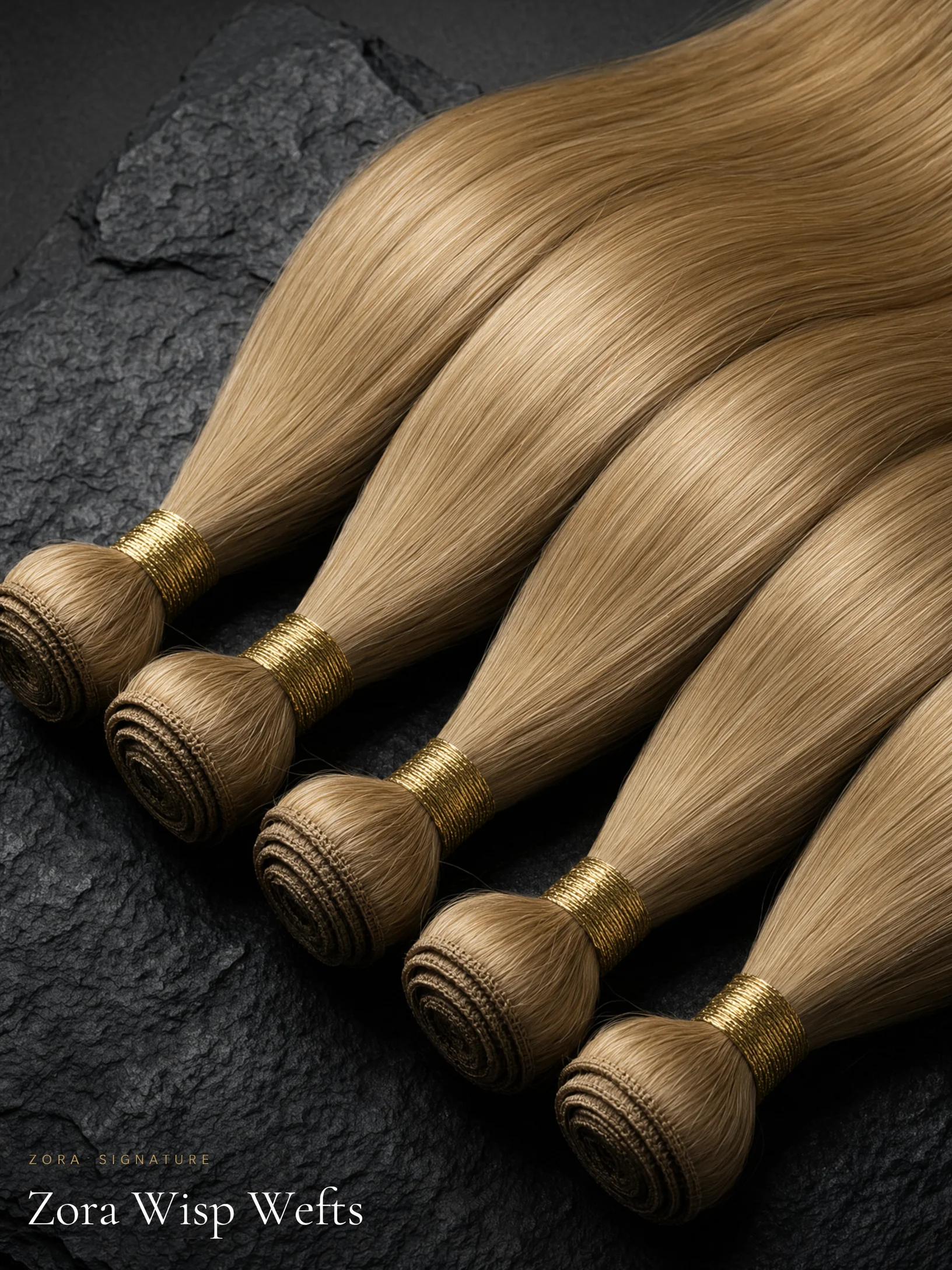
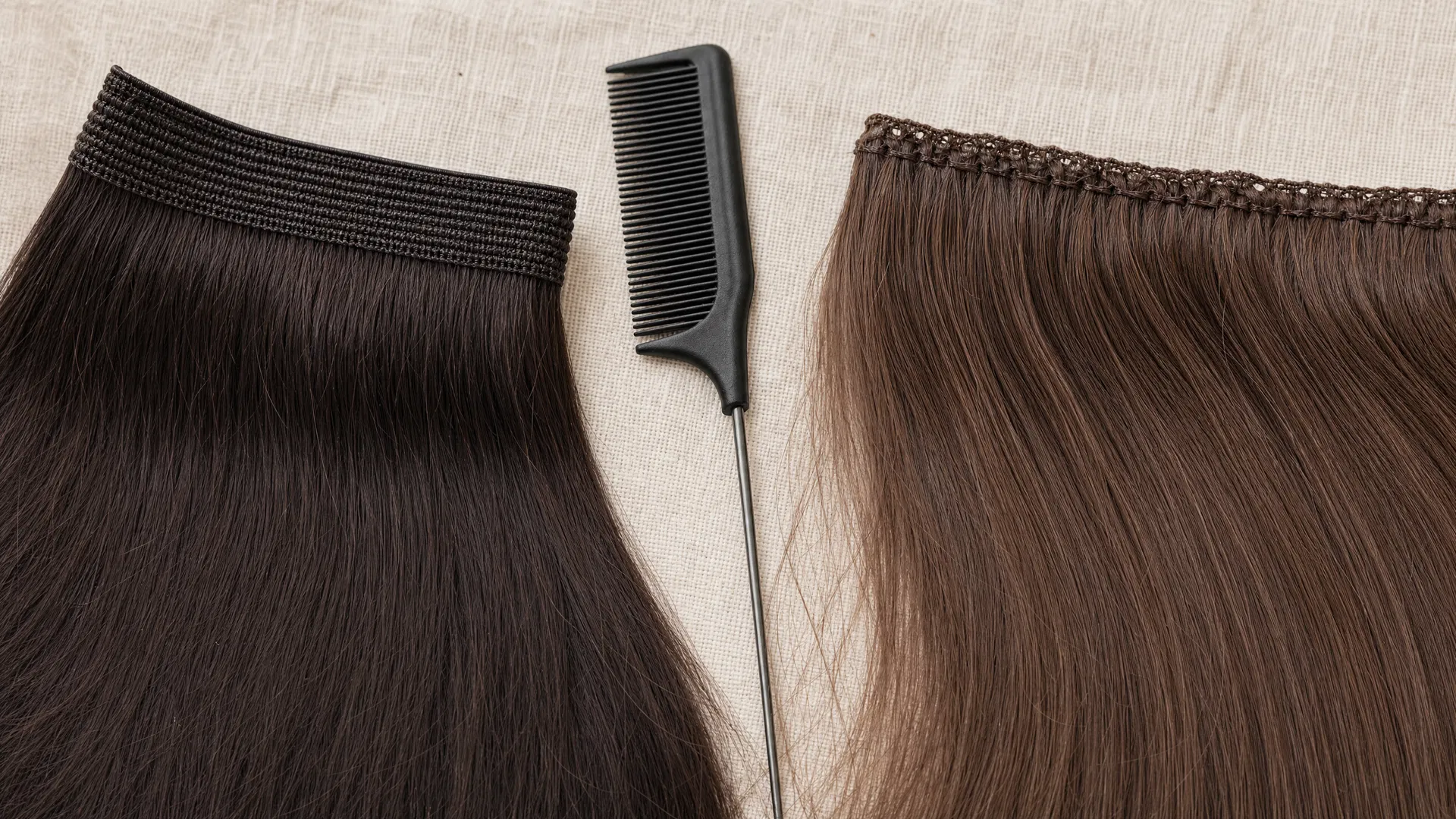
Zora Hair's Reserve Collection is sourced exclusively from European Remy donors. The collection is designed specifically for clients whose natural hair is fine, straight, or low-density — the client profile for whom structural compatibility between the extension hair and the natural hair matters most. The Reserve Collection is available in both Keratin Bond and Wisp Weft formats, in 25 shades matched to the natural color range of fine European hair.
The strand diameter of Reserve Collection hair is matched to the fine end of the European hair spectrum — a deliberate specification, not a general claim. This means that for a client with 50–60 micron natural hair, the extension hair will feel and behave like an extension of her own hair rather than a visible addition to it.
How to Tell If You Need European Hair
Not every client needs European hair. If your natural hair is medium to coarse in texture, high-quality Asian Remy hair will blend well and perform excellently. European hair is specifically the right choice when one or more of the following apply:
- Your natural hair is fine (individual strands feel thin between your fingers)
- Your hair is naturally straight and lacks volume or body
- You have low overall density (less hair per square centimeter of scalp)
- Previous extension sets have felt heavy, stiff, or visibly different from your natural hair
- You have experienced tension or discomfort at attachment points with previous extension methods
If you are unsure, a trained extension specialist can assess your strand diameter and density during a consultation and recommend the appropriate hair quality for your specific hair profile.
The Bottom Line
European hair is not a marketing term — it is a specific structural category with measurable properties that make it the best choice for fine-hair extension clients. The combination of finer strand diameter, rounder cross-section, and thinner cuticle layer produces extension hair that blends more naturally, moves more freely, and places less stress on fine natural hair at the attachment point. For clients who have struggled with extensions feeling heavy, stiff, or visibly different from their natural hair, European Remy hair is the structural solution.
To explore the Zora Hair Reserve Collection — 100% European Remy hair in weft and keratin bond formats — visit the Zora Wisp Weft and Zora Keratin Bonds product pages. For a deeper look at why hair quality matters for fine-hair clients specifically, see Are Hair Extensions Safe for Fine Hair? and How to Match Hair Extension Color.
Keywords
Professional Access
Questions about Zora Hair?
Contact hello@zorahair.com for current product information. Program details and purchasing terms will be announced.
Professional Inquiries