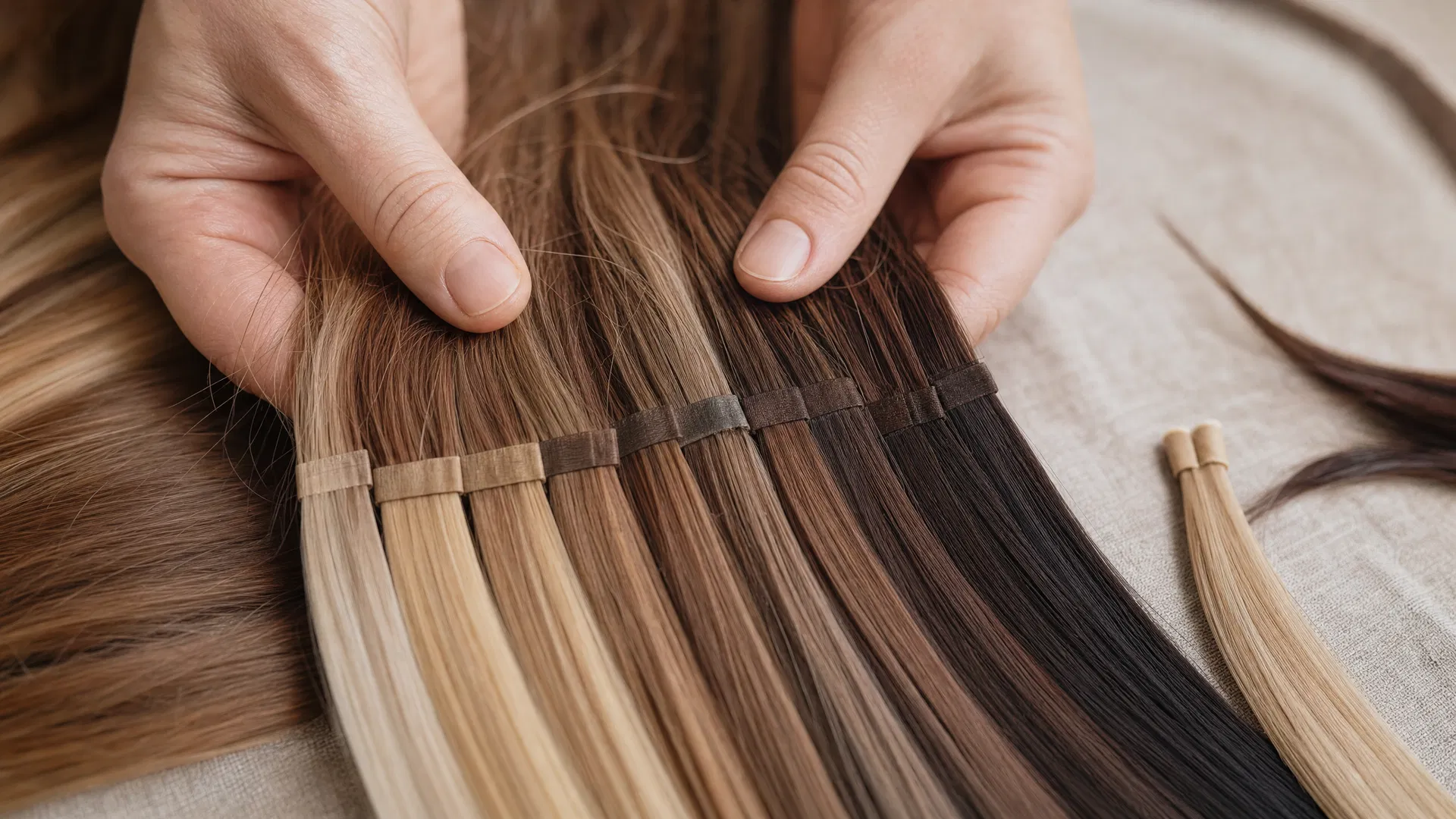
How to Match Hair Extension Color: A Complete Guide for Stylists
Color matching is the single most important technical skill in hair extension work. This expert guide covers how to match hair extension color step by step — from reading the client's natural hair in natural light to navigating shade systems, testing undertones, and making final adjustments at the chair.
Color matching is the single most important technical skill in hair extension work. A perfect install with a poor color match looks unnatural from across the room. A good color match with an imperfect install still looks convincing. This guide covers exactly how to match hair extension color — from reading the client's natural hair to navigating shade systems and making final adjustments at the chair.
This is written for licensed cosmetologists. If you are a client trying to understand the process, this guide will also help you ask better questions and understand what your stylist is doing.
Why Hair Extension Color Matching Is Harder Than It Looks
Natural hair is rarely a single, uniform color. Even hair that appears to be one shade contains multiple tones — base color, mid-shaft variation, ends that have lightened over time, and subtle undertones that shift in different lighting conditions. Extension hair, by contrast, is processed to a specific shade and tends to be more uniform.
This is the fundamental challenge: you are trying to match a variable, living material (natural hair) to a manufactured product with a fixed color profile. The goal is not a perfect laboratory match — it is a visual match that holds up in real-world lighting conditions, in motion, and over time.
Understanding this distinction changes how you approach the process. You are not looking for the extension shade that matches the client's hair in a single light source. You are looking for the shade that disappears into the client's hair across multiple lighting conditions and angles.
Step 1: Assess the Client's Natural Hair in Natural Light
The first step in color matching is always assessment in natural light. Salon lighting — especially overhead fluorescent or warm incandescent — distorts color perception. Natural daylight is the most accurate light source for reading hair color.
When assessing the client's hair, look for three things:
- Base level: The overall depth of the hair on the standard 1–10 level scale (1 = black, 10 = lightest blonde)
- Undertone: The dominant underlying tone — warm (gold, copper, red), cool (ash, violet), or neutral
- Variation: Where the hair is lighter or darker — roots, ends, face-framing pieces, nape
Most clients have variation across all three of these dimensions. The goal is to identify the dominant profile — the color that represents the majority of the hair that will be visible after installation.
Step 2: Identify the Installation Zone
Where the extensions will be installed determines which part of the client's hair you are matching to. This is a step many stylists skip, and it leads to mismatches that are visible at the blend line.
For a standard beaded row or weft installation, the extensions sit at mid-scalp and blend into the hair that falls over them. The color you are matching to is the mid-shaft to ends of the client's hair — not the roots, which will be covered by the client's own hair falling over the extensions.
For keratin bond extensions, the bonds attach at the root zone and the extension hair blends from root to ends. The match needs to work from the attachment point all the way down.
For hair toppers, the topper covers the crown and blends at the perimeter. The critical match zone is the front hairline and the sides where the topper meets the client's natural hair.
Step 3: Match to the Mid-Shaft, Not the Root
This is the most important rule in extension color matching: match to the mid-shaft of the client's hair, not the root.
Roots are almost always darker than the rest of the hair. If you match to the root, the extensions will look too dark at the blend line. The mid-shaft — the section of hair from approximately 3 inches below the root to 3 inches above the ends — is the most representative section of the client's natural color and the zone where the extensions will be most visible.
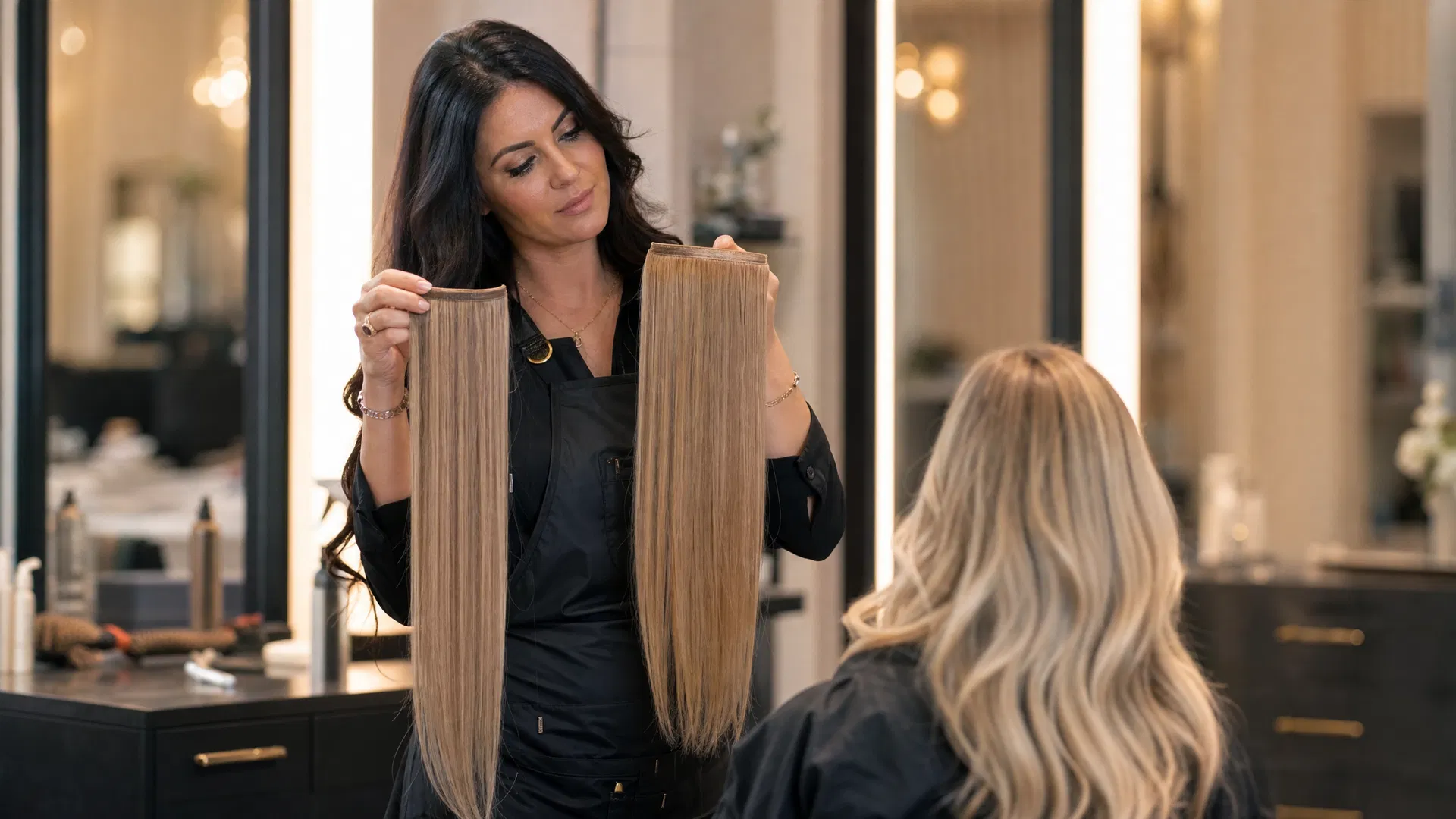
Hold the shade ring or color swatch against the mid-shaft section in natural light. Move through adjacent shades until you find the one that visually disappears into the hair rather than standing out.
Step 4: Understand the Shade System
Different extension brands use different shade naming conventions. Understanding the system you are working with is essential for accurate matching.
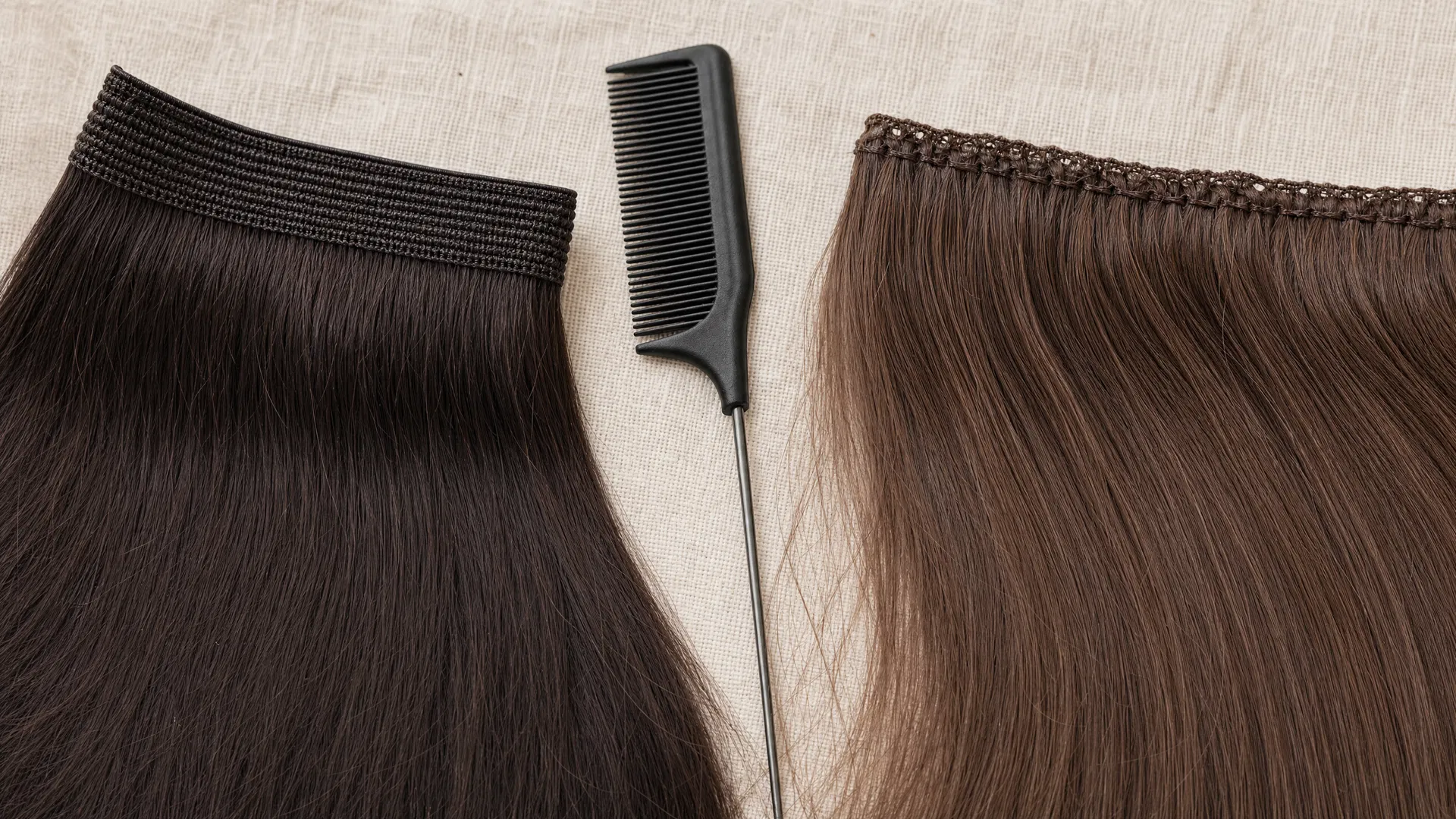
| Shade Type | Description | Best For |
|---|---|---|
| Solid / Single-tone | One uniform color throughout | Clients with very uniform, unprocessed hair |
| Blended | Two or more tones mixed for dimension | Most clients — adds natural variation |
| Rooted | Darker at the top, lighter toward ends | Clients with natural root shadow or balayage |
| Highlighted / Balayage | Lighter pieces throughout | Clients with highlighted or sun-kissed hair |
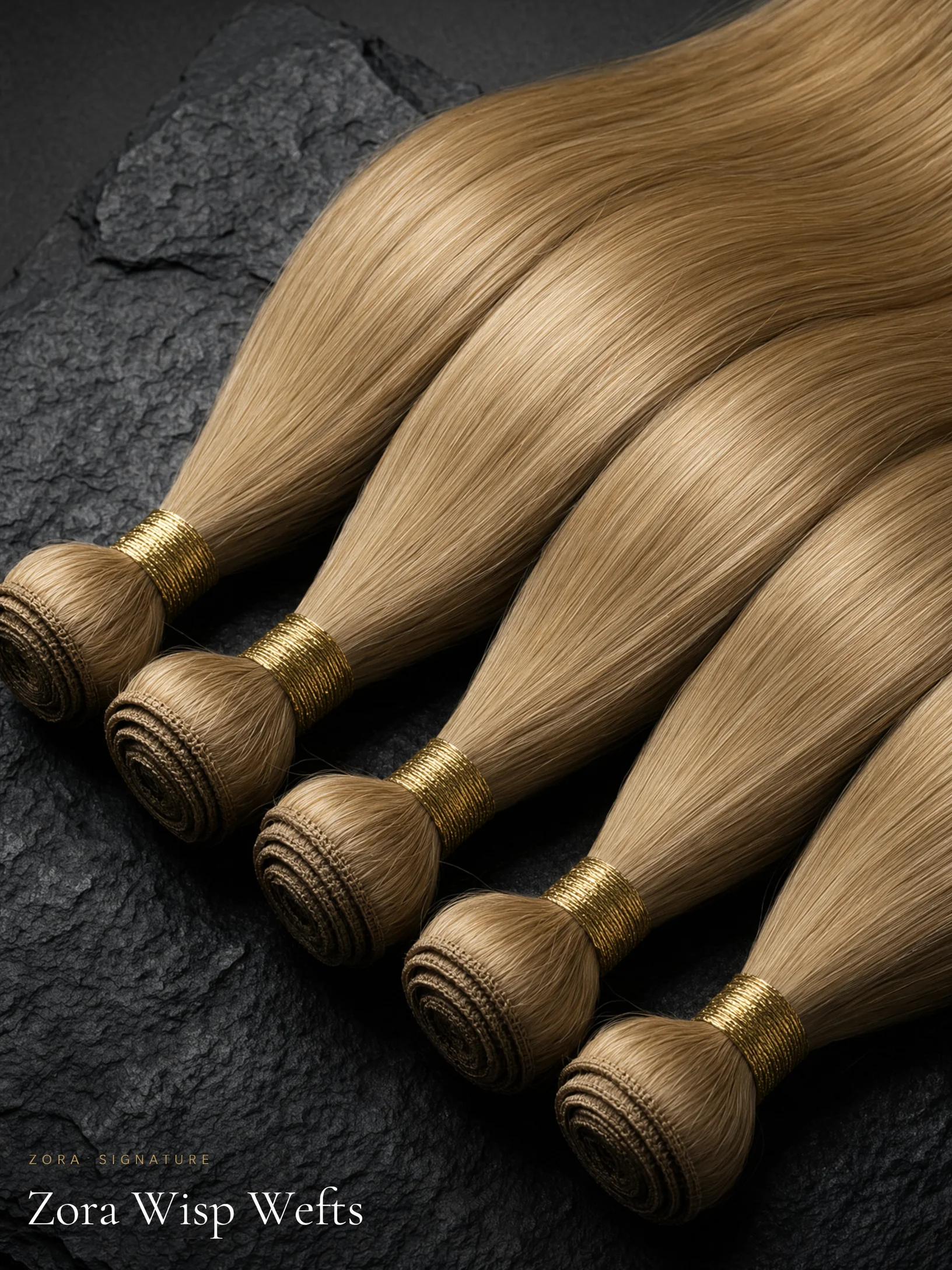
The Zora Hair Signature Collection offers 25 shades across solid, blended, and rooted options. For most clients, a blended or rooted shade will produce a more natural result than a solid shade, because natural hair is rarely truly uniform in color.
Step 5: Test in Multiple Lighting Conditions
Before finalizing the shade selection, test the swatch or shade ring in at least two lighting conditions: natural daylight and the primary lighting environment where the client will spend most of her time.
A shade that looks perfect in the salon under warm lighting may appear too warm or too cool in natural daylight. A shade that matches beautifully in daylight may look slightly off under office fluorescent lighting. The goal is a shade that holds up across the range of lighting the client will encounter in daily life.
If you are between two shades, choose the one that is slightly lighter rather than slightly darker. Extensions that are slightly lighter than the natural hair tend to blend more naturally than extensions that are slightly darker, because darker extensions at the blend line draw the eye downward and create a visible line of demarcation.
Step 6: Account for Color Variation Within the Client's Hair
If the client has highlighted, balayaged, or color-treated hair, a single extension shade will rarely produce a seamless blend. In these cases, there are two professional approaches:
Shade mixing: Use two adjacent shades — one that matches the darker sections and one that matches the lighter sections — and mix them in the installation. This creates natural variation that mirrors the client's own color pattern. Most professional extension brands, including Zora Hair, offer shade mixing guidance for this reason.
Color-matching services: Some stylists offer a color service on the extensions before installation to custom-match a client's specific color profile. This is most common for clients with complex color work (lived-in color, heavy balayage, or multiple tones). Note that coloring extensions requires professional-grade color and technique — extensions are more porous than natural hair and can absorb color differently.
Common Color Matching Mistakes
Even experienced stylists make these errors. Knowing them in advance helps you avoid them.
- Matching to the root: The root is almost always darker than the mid-shaft. Match to the mid-shaft.
- Matching in salon lighting only: Always check the match in natural light before finalizing.
- Choosing a solid shade for highlighted hair: Highlighted hair needs a blended or mixed shade approach.
- Ignoring undertone: A shade that is the right level but the wrong undertone (warm vs. cool) will look noticeably different at the blend line.
- Ordering without a physical swatch: Color on a screen or in a catalog photo is not reliable. Always use physical shade swatches for final selection.
How the Zora Hair Shade System Works
The Zora Hair Signature Collection is organized into 25 shades across four categories: natural brunettes, blondes, reds and coppers, and blended/rooted options. Each shade is available in both weft and keratin bond formats, and in 14-inch and 18-inch lengths.
For color matching, Zora Hair provides physical shade swatches to verified Professional Access members. Shade swatches are the most accurate tool for matching — they show the actual hair color in three dimensions, including how it reflects light and how the tones shift from root to end.
If you are a licensed cosmetologist interested in Professional Access, the application process includes shade swatch access as part of onboarding.
When to Recommend a Color Service Before Extensions
Sometimes the right answer is not to find a shade that matches the client's current color — it is to adjust the client's color first so that a clean shade match is possible.
This is most common when:
- The client has very uneven color from previous DIY coloring
- The client has significant banding or color inconsistency from previous extension work
- The client wants to change her color and add extensions at the same time
- The client's current color is between two shades and neither produces a clean match
In these cases, a color service before extension installation — even a simple gloss or toner — can create a more uniform base that makes shade matching significantly easier and produces a cleaner final result.
The Bottom Line
Color matching for hair extensions is a skill that improves with practice and attention to process. The fundamentals are consistent: assess in natural light, match to the mid-shaft, understand the undertone, test in multiple lighting conditions, and use physical swatches rather than digital references.
For licensed cosmetologists working with Zora Hair, the 25-shade Signature Collection and physical shade swatch system are designed to make this process as accurate as possible. If you have questions about shade selection for a specific client, the Zora Hair professional support team is available to help.
Ready to explore the full shade range? The Zora Wisp Weft and Zora Keratin Bonds are both presented in all 25 Signature Collection shades. Visit Professional Inquiries for current product and shade information.
Keywords
Professional Access
Questions about Zora Hair?
Contact hello@zorahair.com for current product information. Program details and purchasing terms will be announced.
Professional Inquiries