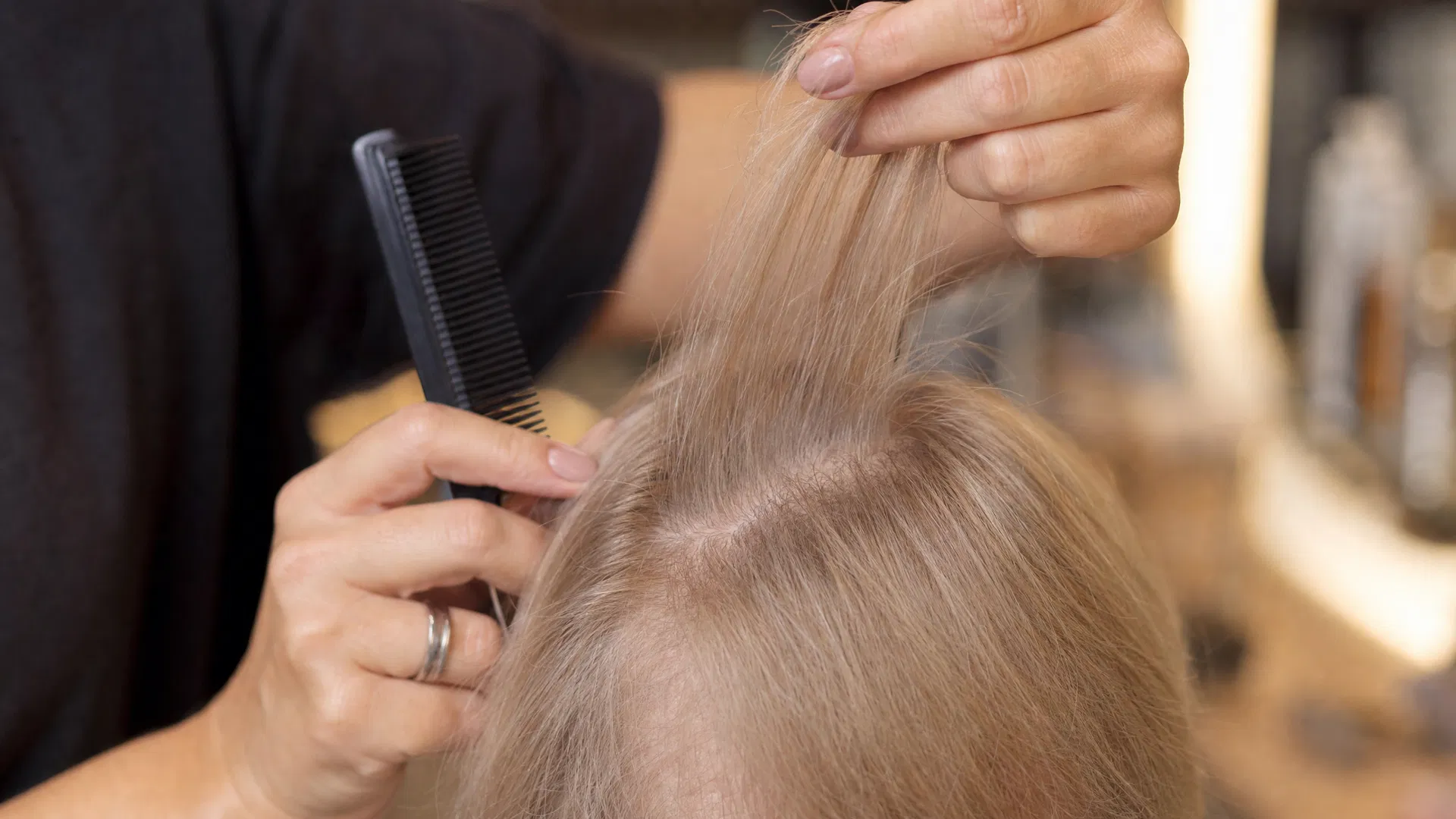
Are Hair Extensions Safe for Fine Hair? What You Need to Know Before Your Consultation
Hair extensions can be completely safe for fine hair — but the method, hair quality, and stylist training matter more for fine-hair clients than for any other hair type. This guide addresses the safety question directly and explains what to look for in a fine-hair extension consultation.
Fine hair and hair extensions have a complicated reputation. The concern is understandable: if your hair is already fine, thin, or low-density, adding weight and attachment points sounds like a recipe for damage. The reality is more nuanced. Hair extensions can be completely safe for fine hair — but only when the right method is chosen, the right hair quality is used, and the installation is performed by a stylist who is specifically trained in fine-hair extension work. This guide addresses the safety question directly and explains what fine-hair clients need to know before their first extension consultation.
The Real Risk: Weight and Tension, Not Extensions Themselves
Extensions do not damage fine hair inherently. What damages fine hair is inappropriate weight and tension at the attachment point. When extensions are too heavy for the natural hair supporting them, or when the attachment creates chronic tension on the follicle, the result can be traction alopecia — hair loss caused by sustained pulling on the root. This is a real risk, but it is a risk of improper installation, not of extensions as a category.
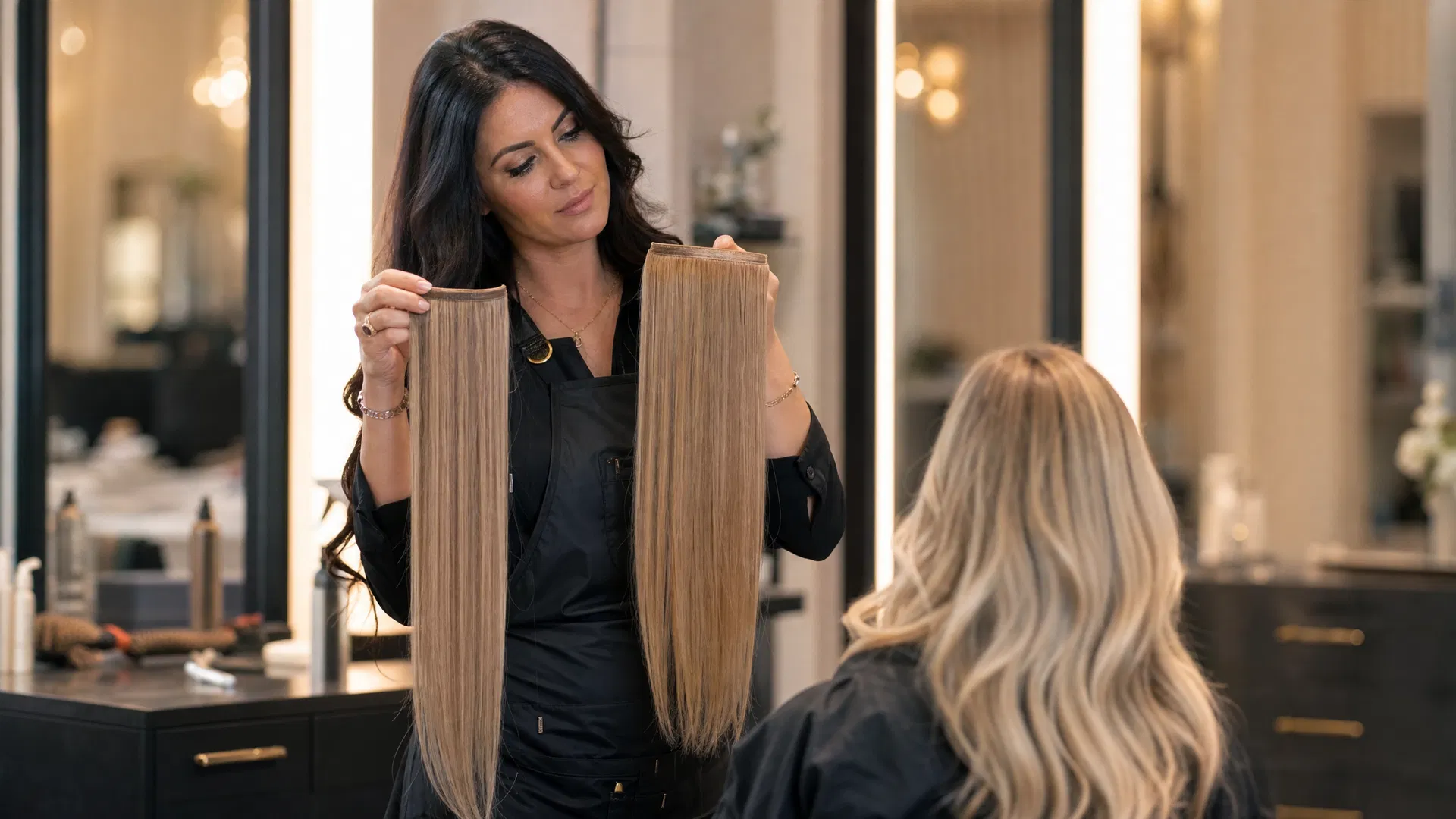
A trained extension specialist assesses the client’s natural hair density, strand diameter, and scalp health before recommending any method. The assessment determines how much weight the natural hair can safely support, which attachment method creates the least tension for that specific hair type, and how many extension strands or how much weft length is appropriate. Fine hair clients who are told “extensions aren’t for you” without this assessment have not received a proper consultation — they have received a generalization.
Which Extension Methods Are Safest for Fine Hair?
Not all extension methods are equally appropriate for fine hair. The key variables are attachment weight, point of attachment, and how the load is distributed across the natural hair.
Genius Weft Extensions (Beaded Row Methods)
Weft extensions applied with a beaded row method — invisible beaded row, classic beaded row, or express beaded row — are among the most fine-hair-friendly options available when installed correctly. The weight of the weft is distributed across an entire row of beads rather than concentrated at individual points. This load distribution is the critical advantage for fine hair: no single strand of natural hair is bearing the full weight of the extension.
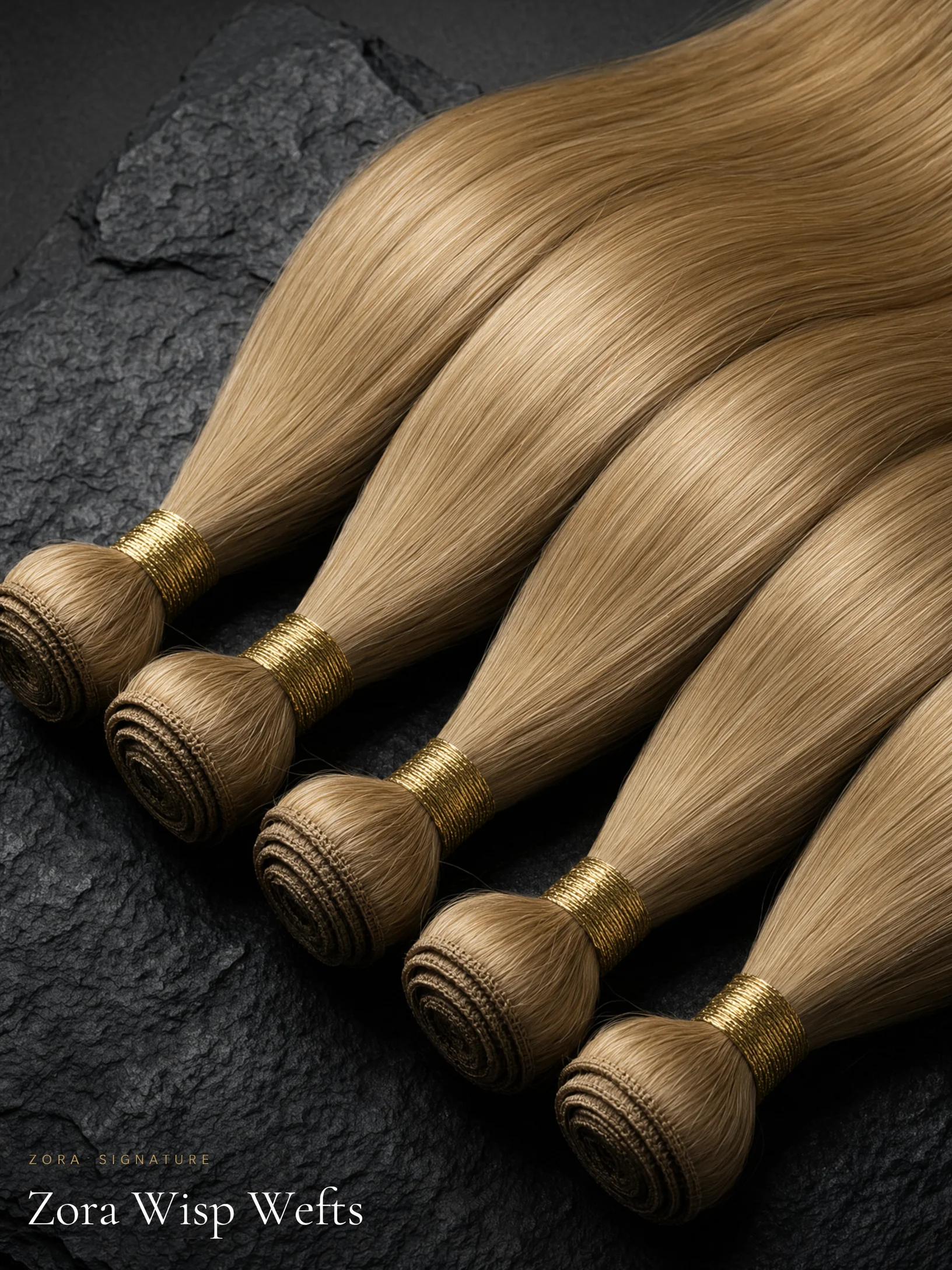
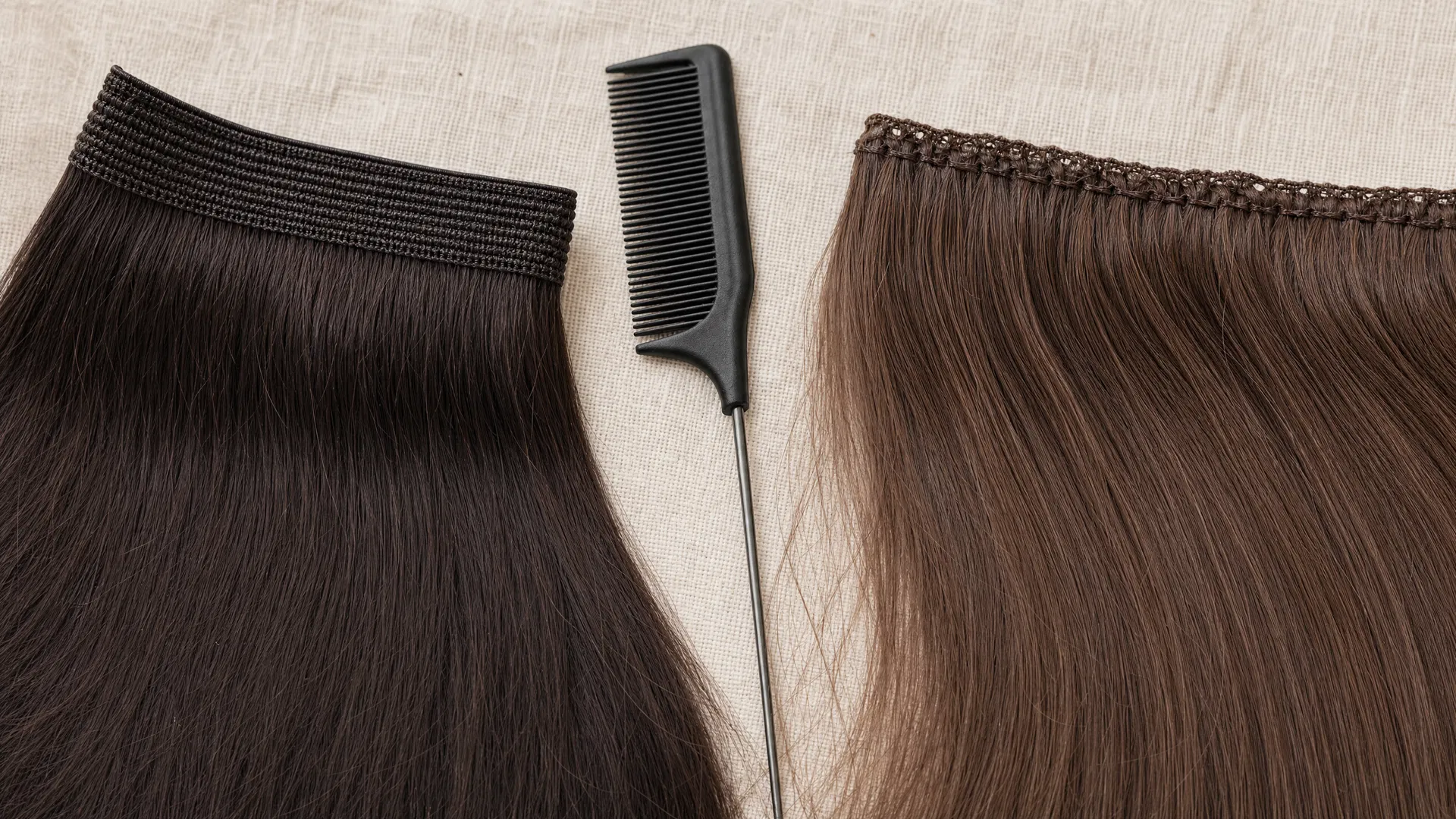
The Zora Wisp Weft is specifically constructed for fine-hair compatibility. Its ultra-thin header profile — the sewn edge at the top of the weft — lies flat against the scalp without creating bulk at the attachment row. The weft is also cuttable without shedding, which allows the stylist to customize the weft length precisely to the client’s density zone, rather than applying a standard-length weft that may be too heavy for a fine-hair client’s thinner sections.
Keratin Bond Extensions (Micro-Mini Bonds)
Standard keratin bonds are attached strand by strand and can be appropriate for fine hair when the bond size is reduced. Micro-mini keratin bonds — a smaller-diameter bond specifically designed for fine or fragile hair — reduce the attachment weight at each point and allow for more precise placement. For fine-hair clients who want the natural movement and individual strand behavior of keratin bonds, micro-mini bonds are the appropriate format.
Standard-size keratin bonds are generally not recommended for very fine or low-density hair. The bond weight, multiplied across a full installation, can create cumulative tension that fine hair cannot sustain over a 4–6 month service period. A trained stylist will specify the bond size appropriate for the client’s hair before the installation begins.
Methods to Approach with Caution for Fine Hair
Tape-in extensions, clip-in extensions worn daily, and sew-in weaves are generally less appropriate for fine hair. Tape-ins create a sandwich attachment that can be difficult to remove without stress on fine strands. Clip-ins worn daily create repeated tension at the same attachment points. Sew-in weaves require braiding the natural hair as a foundation, which creates sustained tension that fine hair typically cannot tolerate over a long service period.
This does not mean these methods are never used on fine hair — but they require more careful assessment and are more likely to be contraindicated for clients with very fine or low-density hair than beaded row wefts or micro-mini bonds.
What Fine Hair Clients Should Expect at a Consultation
A proper fine-hair extension consultation is more detailed than a standard consultation. The stylist should assess several specific factors before making any method recommendation:
Strand diameter: Fine hair has a smaller strand diameter than medium or coarse hair. The stylist should visually assess and, in some cases, physically feel the strand diameter to determine how much weight each strand can support.
Density: Hair density — the number of strands per square inch of scalp — is separate from strand diameter. A client can have fine strands but high density, or coarse strands but low density. Both factors affect the method recommendation. Low-density fine hair requires the most conservative approach.
Scalp health: Existing scalp conditions, previous chemical damage, or signs of early traction alopecia from previous extension work are all relevant to the consultation. A responsible stylist will not install extensions on a compromised scalp without addressing the underlying condition first.
Lifestyle and maintenance commitment: Fine hair clients who are not committed to the home care protocol — particularly the brushing technique and sleeping habits described in the extension home care guide — are at higher risk for matting and tension damage at the attachment points. The consultation should include a realistic discussion of the maintenance commitment required.
The Hair Quality Factor: Why It Matters More for Fine Hair
Hair quality affects every extension client, but it matters more for fine hair clients than for any other hair type. Here is why: fine hair clients are already working with less natural hair to support the extension attachment. If the extension hair itself is low quality — non-Remy, processed, or prone to tangling — the additional stress of managing tangled or matted extension hair falls disproportionately on the fine natural hair at the attachment point.
100% Remy human hair, in which the cuticle layer is intact and all strands run in the same direction, resists tangling and behaves predictably through the service life. Non-Remy hair — in which cuticles are stripped and the hair is coated with silicone to simulate smoothness — begins to tangle and mat after the first few washes as the silicone coating wears off. For a fine-hair client, managing matted extension hair is not just inconvenient; it is a direct risk to the natural hair at the attachment point.
European Remy hair has an additional advantage for fine-hair clients specifically: its strand diameter is finer than Asian or Indian Remy hair, which is the dominant hair type in most extension products. A finer extension strand blends more naturally with fine natural hair and creates less contrast at the attachment point where the two hair types meet. The Zora Hair Reserve Collection uses European Remy hair for this reason — it is specifically suited to clients with fine to medium-fine natural hair who need the closest possible match in texture and strand weight.
Signs That Extensions Are Too Heavy for Your Hair
Even with a proper consultation and correct installation, fine-hair clients should monitor for signs that the extensions are creating too much tension. These signs warrant a call to your stylist before your next scheduled appointment:
Tenderness or soreness at the attachment points that persists beyond the first 48–72 hours after installation. Some initial tenderness is normal as the scalp adjusts to the new weight. Tenderness that does not resolve, or that returns between appointments, is a signal that the attachment is creating sustained tension.
Visible thinning at the attachment rows when the extensions are removed. Some shedding of accumulated shed hairs is normal at removal (as described in the extension longevity guide). Actual thinning of the natural hair at the attachment line is not normal and should be addressed immediately.
Extensions that feel significantly heavier than they did after installation. This can indicate that the weft has shifted or that the attachment has loosened, causing the weight to be concentrated on fewer attachment points than intended.
Breakage at the attachment point rather than at the ends of the natural hair. Natural hair breaks at its weakest point. If breakage is occurring at the attachment row rather than at the ends, the attachment is creating a stress point that the natural hair cannot sustain.
The Stylist’s Role in Fine-Hair Extension Safety
The single most important factor in whether extensions are safe for fine hair is the stylist performing the installation. A stylist who is not specifically trained in fine-hair extension work may apply the same method and the same amount of hair to a fine-hair client as to a medium or thick-hair client. This is the most common cause of extension damage in fine-hair clients — not the method itself, but the failure to customize the installation to the client’s specific hair type.
A trained fine-hair extension specialist will use less hair overall (fewer weft rows or fewer bond strands), use a lighter-weight weft or smaller bond size, place attachments strategically to distribute weight evenly, and check in with the client at the first move-up or midway appointment to assess how the natural hair is responding. The installation is not a one-size-fits-all procedure — it is a customized application that should be adjusted based on the client’s specific hair characteristics.
Zora Hair works exclusively with licensed professionals who are trained and certified in professional extension methods. To find a certified Zora stylist near you who has experience with fine-hair clients, visit the Zora Hair stylist directory. To explore the hair formats designed for fine-hair compatibility — including the Zora Wisp Weft and the Reserve Collection — visit the Zora Wisp Weft collection and the Zora Keratin Bond collection.
Keywords
Professional Access
Questions about Zora Hair?
Contact hello@zorahair.com for current product information. Program details and purchasing terms will be announced.
Professional Inquiries