Keratin Bonds vs. Flat Wefts: Which Extension Method Is Right for Your Client?
Strand-by-strand vs row-based installs, movement, density needs, maintenance, removal, fine hair concerns, and client fit.
Keratin bonds are usually better when the stylist needs detailed strand-by-strand placement. Flat wefts, often searched as Genius Weft-style wefts, are usually better when the client has enough anchor hair and needs low-bulk fullness through a row-based install. The right method depends on density, scalp visibility, lifestyle, maintenance, and client goals.
That is the short answer.
But this is not a "which method is better" conversation.
Both keratin bonds and flat wefts can create beautiful results. Both can also be wrong for the wrong client. A strong stylist does not choose based on what is trending. She chooses based on the client's hair, support hair, desired result, styling habits, and maintenance commitment.
This guide explains the difference between keratin bonds and flat wefts, when each method may be appropriate, when neither method is the right fit, and how Zora products fit into a professional hair enhancement strategy.
Keratin Bonds and Flat Wefts Solve Different Problems
Keratin bonds and flat wefts are both professional extension options, but they are not used the same way.
Keratin bonds are applied in small sections. That gives the stylist more detailed control over placement, movement, and density distribution.
Flat wefts are installed in rows. They are usually used when the client needs fuller coverage through the sides, back, mids, and ends, and has enough healthy anchor hair to support row-based installation.
| Client Need | Better Starting Point |
|---|---|
| Detailed strand-by-strand placement | Keratin bonds |
| Low-bulk fullness through a row | Flat weft / Genius Weft-style weft |
| Fine hair with enough density | Depends on placement needs |
| Medium-density hair needing fuller rows | Flat weft |
| Small areas needing targeted fullness | Keratin bonds |
| Crown or part-line coverage | Hair topper or integration |
| Advanced hair loss | Meshless integration, mesh integration, or wig may be better |
| Full coverage need | Wig, when appropriate |
The method should follow the client's real need.
If the client needs fullness through the mids and ends, extensions may be appropriate. If she needs coverage at the crown or part line, neither keratin bonds nor flat wefts may solve the main problem.
What Are Keratin Bonds?
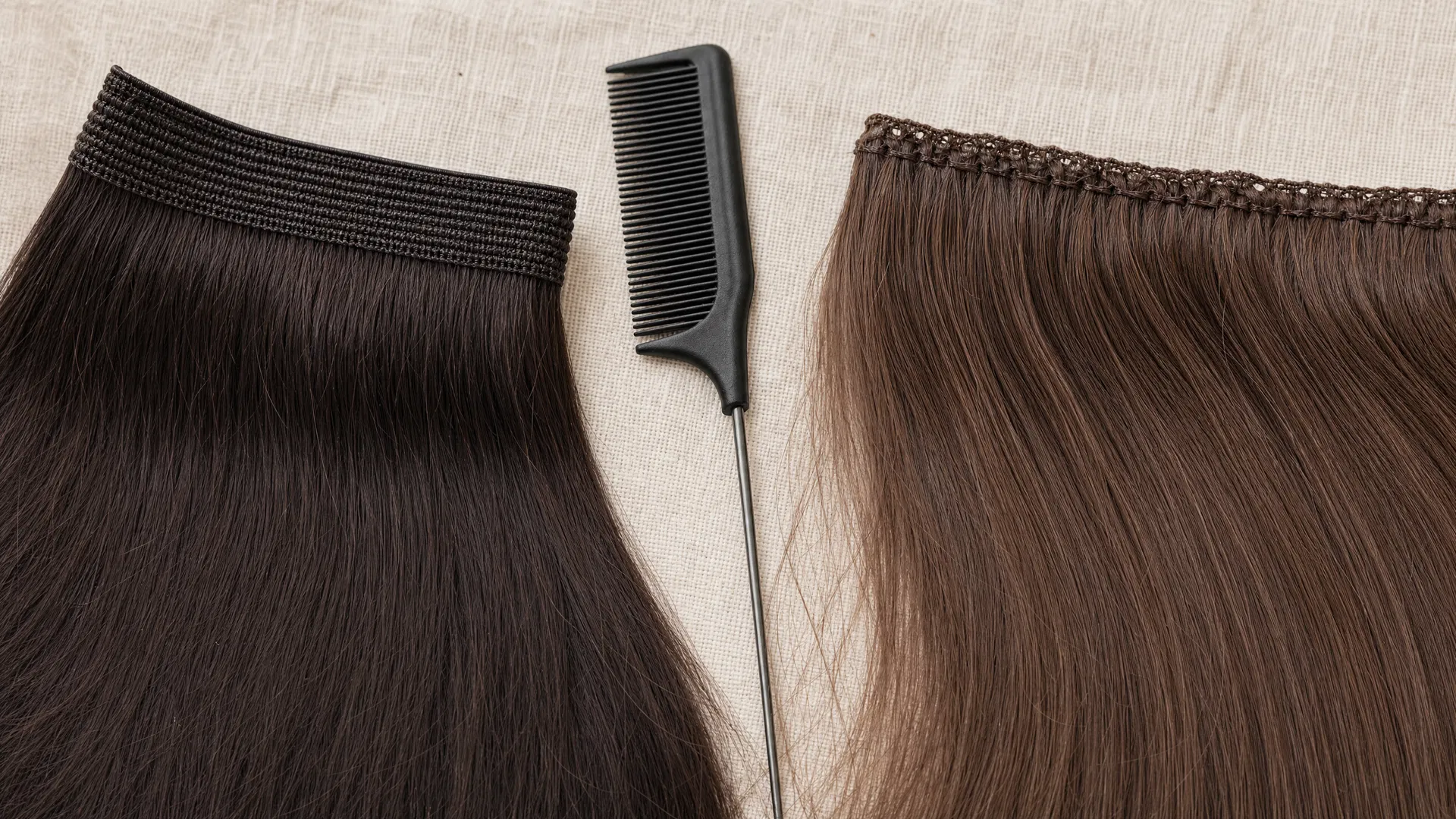
Keratin bonds are individual strand extensions attached in small sections using a keratin-based bond. They are often chosen when the stylist wants more detailed placement than a row-based weft can provide.
Keratin bonds may be useful when the stylist needs:
- Strand-by-strand placement
- More movement
- More targeted fullness
- Less dependence on a horizontal row
- Detailed blending around certain areas
- A method that can be distributed more selectively
Keratin bonds may be a good fit when the client has:
- Enough healthy density to support the bonds
- A desire for natural movement
- A need for more detailed placement
- A lifestyle that supports maintenance
- Hair that can safely carry the added weight
- A stylist trained in keratin bond application and removal
Keratin bonds are not a shortcut. They require clean sectioning, proper placement, appropriate bond size, strong maintenance education, and careful removal.
Done well, they can look extremely natural. Done poorly, they can create matting, discomfort, breakage, or maintenance problems.
What Are Flat Wefts?
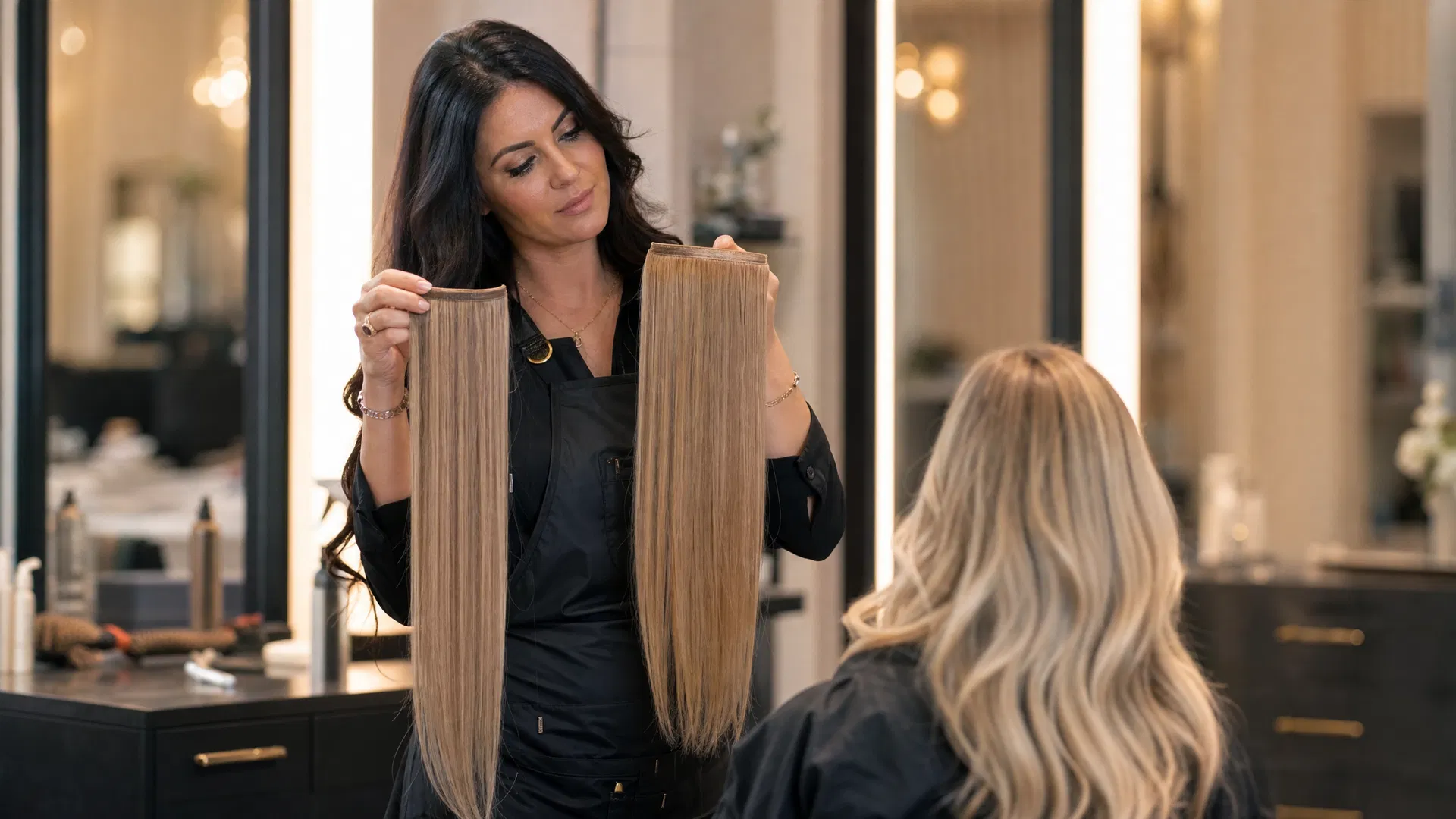
A flat weft is a professional hair extension weft designed with a lower-bulk top seam for row-based installs.
Many stylists search for Genius Weft when they are looking for this kind of weft: low-bulk, customizable, and suitable for professional row-based methods.
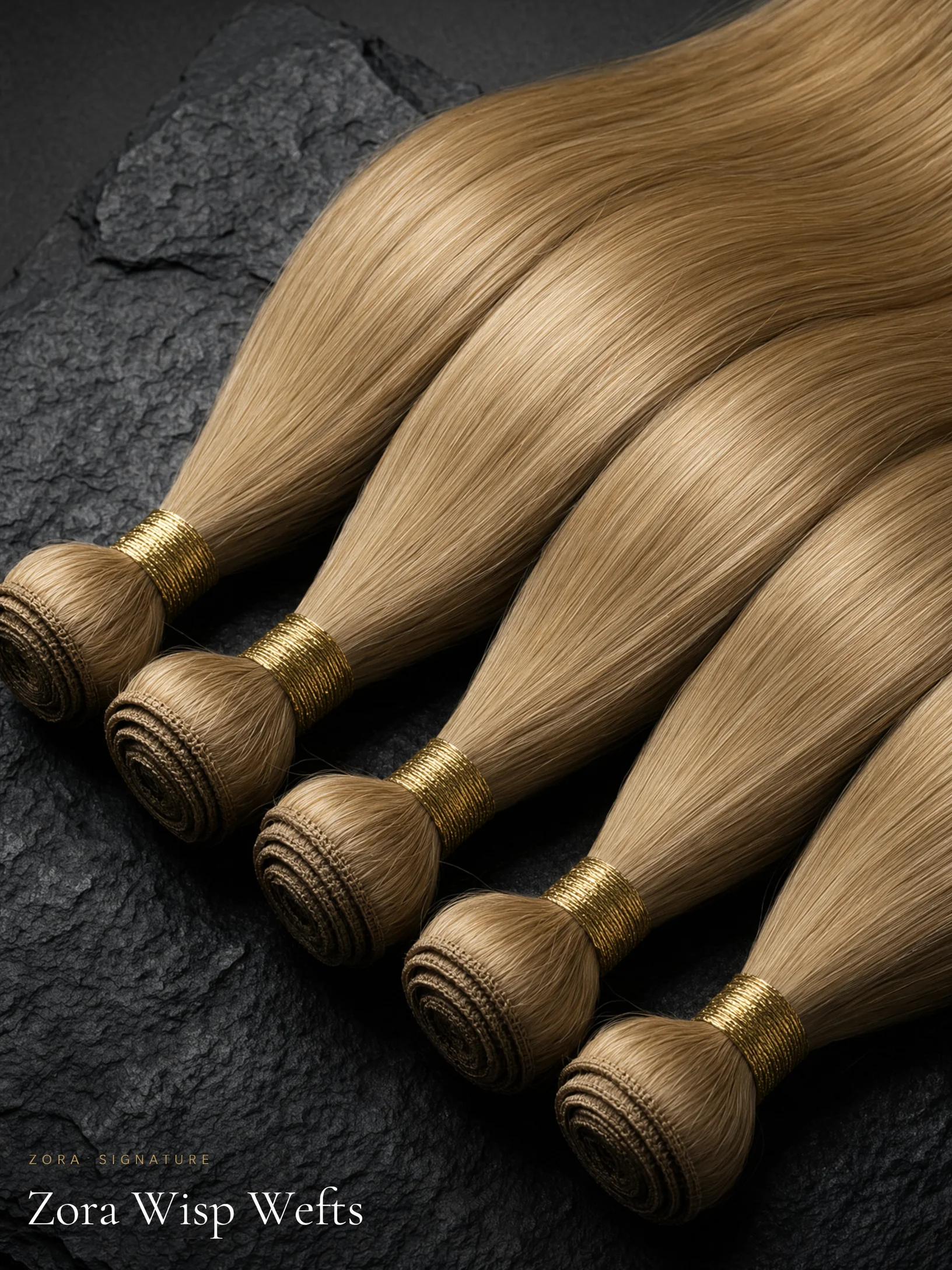
Zora Wisp Weft is Zora Hair's flat weft for licensed cosmetologists.
Flat wefts may be useful when the stylist needs:
- Low-bulk row-based fullness
- Width customization
- A more discreet row than a traditional bulky machine weft
- A weft option for fine or medium-density clients
- Fullness or length through the sides, back, mids, or ends
- A method that works with bead-row, sew-in, flat-track, or hand-tied row-style installs
Flat wefts may be a good fit when the client has:
- Enough healthy anchor hair
- Minimal scalp visibility in the install area
- A need for fullness or length
- A desire for lower bulk
- A lifestyle that supports row-based maintenance
- A stylist trained in the installation method
A flat weft is not automatically right for every fine-hair or hair-loss client.
If the client needs crown coverage, part-line coverage, or full coverage, a topper, integration method, or wig may be the better direction.
Keratin Bonds vs. Flat Wefts: Main Differences
Here is the simplest comparison:
| Feature | Keratin Bonds | Flat Weft / Genius Weft-Style Weft |
|---|---|---|
| Application style | Individual strand-by-strand placement | Row-based installation |
| Main strength | Detailed placement and movement | Low-bulk fullness across a row |
| Best for | Targeted fullness and natural movement | Fuller rows, length, and low-bulk volume |
| Customization | Placement by individual bond | Width and row customization |
| Maintenance needs | Bond care, separation, brushing, removal timing | Row maintenance, tension checks, brushing, move-ups |
| Client fit | Enough density to support individual bonds | Enough anchor hair to support a row |
| Not ideal for | Very fragile hair, active shedding, poor maintenance habits | Crown thinning, insufficient anchor hair, coverage needs |
| Better alternative when coverage is needed | Hair topper or integration | Hair topper or integration |
The difference is not only product type.
It is placement philosophy.
Keratin bonds distribute hair in smaller points. Flat wefts create fullness through a row. Each method changes how weight, movement, and maintenance are managed.
When Keratin Bonds May Be the Better Choice
Keratin bonds may be the better option when the client needs detailed placement or when a row-based method does not make sense.
Consider keratin bonds when:
- The client needs targeted fullness in a specific area
- The client wants more natural movement than a row can provide
- The client's density supports individual bond placement
- The stylist needs to work around a specific area
- A row-based method would create too much bulk or tension
- The client has enough healthy hair to support the bonds
Keratin bonds may not be the right choice when:
- The client has active shedding or fragile hair
- The client cannot maintain the bonds properly
- The client needs crown or part-line coverage
- The client has too little support hair
- The scalp needs medical evaluation first
When Flat Wefts May Be the Better Choice
Flat wefts may be the better option when the client needs low-bulk fullness through a row and has enough healthy anchor hair.
Consider flat wefts when:
- The client needs fullness or length through the sides, back, mids, or ends
- The client has enough healthy anchor hair for row-based installation
- The stylist wants a low-bulk, customizable row option
- The client wants less bulk than a traditional machine weft
- The client can maintain row-based services
Flat wefts may not be the right choice when:
- The client needs crown coverage or part-line coverage
- The client has too little support hair for a row
- The scalp is visible in the install area
- The client needs a topper or integration method
- The client cannot maintain the service
When Neither Method May Be Right
Extensions — whether keratin bonds or flat wefts — are not the right answer for every client.
If the client needs:
- Crown coverage
- Part-line coverage
- Coverage for diffuse thinning
- Support for advanced hair loss
- Full coverage
Then toppers, meshless integration, mesh integration, or wigs may be the better direction.
Recommending the wrong method is not a small mistake. It can lead to discomfort, damage, client dissatisfaction, and a loss of trust.
The best stylists know when to say: this client is not an extension candidate right now.
Comfort and Tension
Both keratin bonds and flat wefts can feel comfortable when installed correctly. Both can feel uncomfortable when installed poorly or used on the wrong client.
Comfort depends on:
- Section size
- Weight distribution
- Placement
- Tension
- Client density
- Scalp sensitivity
- Maintenance timing
- Amount of hair added
- Lifestyle
- Stylist technique
Keratin bonds distribute weight across many small points. Flat wefts distribute weight along rows. Either can feel comfortable when installed correctly on the right client.
Either can feel uncomfortable when installed poorly or used on the wrong client.
The goal is not to make the install feel tight. The goal is to make it feel secure, balanced, and sustainable.
If the client reports pain, pulling, soreness, redness, itching, or headaches, the stylist should reassess.
Color Matching and Blending
Color matching is important with both keratin bonds and flat wefts, but the blending strategy can differ.
Keratin bonds may allow more detailed color placement because individual strands can be placed strategically through the hair.
Flat wefts may create broader panels of fullness, so shade matching, dimensional blending, and placement are important.
Stylists should evaluate:
- Root color
- Mids and ends
- Natural dimension
- Grey blending
- Warmth or coolness
- Tonal shifts in different lighting
- Existing color history
- Whether a topper or integration piece also needs to match
Color errors are not small. They can make even a technically good install look obvious.
A professional extension result depends on both method and color.
Product Decision Guide: Keratin Bonds, Wisp Weft, Toppers, or Integration?
Use this table as a quick consultation guide.
| Client Goal | Possible Zora Direction | Why |
|---|---|---|
| Targeted fullness | Keratin bonds | Strand-by-strand placement |
| Low-bulk row-based fullness | Zora Wisp Weft | Fuller row with low-bulk placement |
| Length with enough density | Zora Wisp Weft or keratin bonds | Depends on desired placement |
| Crown coverage | Hair topper | Adds coverage where extensions cannot |
| Secure topper placement | Beaded topper method | Professional topper support |
| Diffuse thinning support | Meshless integration or mesh integration | More complete density and coverage support |
| Full coverage | Wig, when Zora's wig line launches | Better for advanced coverage needs |
This is the Zora advantage: the answer is not always one product. The answer is the right product for the client.
Where Zora Wisp Weft Fits
Zora Wisp Weft is Zora Hair's flat weft for licensed cosmetologists.
It may be a strong fit when the client has enough healthy anchor hair and wants low-bulk fullness or length through a row-based install.
Wisp Weft may be appropriate when:
- The client has enough anchor hair
- The client wants fullness or length
- The crown and part line do not need coverage
- The stylist wants a low-bulk row-based option
- The client can maintain the service
Wisp Weft may not be the first choice when:
- The client needs crown coverage
- The part line is widening
- The scalp is visible on top
- The client has too little support hair
- The client needs a topper or integration method
This is honest method selection. Not every client is a Wisp Weft client. The right client is.
Where Zora Keratin Bonds Fit
Zora Keratin Bonds may be useful when the stylist needs detailed strand-by-strand placement instead of row-based fullness.
Keratin bonds may be appropriate when:
- The client has enough healthy density
- The stylist needs targeted placement
- The client wants natural movement
- The client is not an ideal row-based candidate
- The client can maintain the bonds properly
- The stylist is trained in bond placement and removal
Keratin bonds may not be appropriate when:
- The client has active shedding
- The hair is too fragile
- The client has too little support hair
- The client needs top coverage
- The client cannot maintain the method
- The scalp needs medical evaluation first
Keratin bonds can be a beautiful tool, but they are not a universal answer.
"Keratin bonds and flat wefts solve different problems. If I need detailed placement and movement, I'm thinking about bonds. If the client has enough anchor hair and needs low-bulk fullness through a row, I'm thinking about Wisp Weft. But if the client is worried about her crown or part line, I'm not forcing extensions — I'm looking at toppers or integration."
— Krista Abad, Zora Hair Ambassador and 25-year hair extension and hair loss integration specialist
Common Questions About Keratin Bonds vs. Flat Wefts
What is the difference between keratin bonds and flat wefts?
Keratin bonds are applied in small individual sections for strand-by-strand placement. Flat wefts are installed in rows and are often chosen for low-bulk fullness, length, and row-based customization.
Are keratin bonds better than flat wefts?
Not automatically. Keratin bonds may be better for detailed placement and natural movement. Flat wefts may be better for low-bulk row-based fullness. The right method depends on the client's density, goals, lifestyle, and maintenance.
Are flat wefts the same as Genius Wefts?
Many stylists search for Genius Weft when they are looking for a low-bulk, customizable flat weft. Zora Wisp Weft is Zora Hair's flat weft for licensed cosmetologists.
Are keratin bonds good for fine hair?
Keratin bonds can be a good option for some fine-hair clients when there is enough healthy density to support the bonds. They may not be appropriate for fragile hair, active shedding, or clients who cannot maintain them.
Are flat wefts good for fine hair?
Flat wefts can be useful for fine-hair clients who have enough healthy anchor hair for row-based installation. If the client has crown thinning, part-line thinning, or too little support hair, a topper or integration method may be better.
Which lasts longer: keratin bonds or flat wefts?
Longevity depends on the product, client hair growth, installation method, maintenance, lifestyle, and stylist recommendation. Stylists should avoid promising a fixed wear time without evaluating the client.
Can keratin bonds or flat wefts be used for hair loss clients?
Sometimes, if the client has enough healthy support hair and mainly needs fullness or length. If the client needs crown coverage, part-line coverage, or has advanced thinning, toppers, meshless integration, mesh integration, or wigs may be better.
Should clients with hair loss see a dermatologist before extensions?
If the client has sudden shedding, unexplained hair loss, scalp pain, inflammation, scaling, sores, patchy loss, or rapidly progressing thinning, she should be encouraged to see a dermatologist or qualified medical provider before attachment-based services.
Summary
Keratin bonds and flat wefts are both valuable professional extension options, but they solve different problems.
Keratin bonds are often better when the stylist needs detailed strand-by-strand placement, natural movement, and targeted fullness.
Flat wefts, often searched as Genius Weft-style wefts, are often better when the client has enough anchor hair and needs low-bulk fullness through a row-based install.
Zora Wisp Weft is Zora Hair's flat weft for licensed cosmetologists. Zora Keratin Bonds give stylists another option when strand-by-strand placement is the better fit.
The best stylists do not choose based on trend. They choose based on client fit, support hair, scalp visibility, lifestyle, and the result the client actually needs.
Need the right extension method for your clients?
Explore Zora Wisp Weft, Zora Keratin Bonds, and Zora's professional hair enhancement products for licensed cosmetologists.
Keywords
Professional Access
Questions about Zora Hair?
Contact hello@zorahair.com for current product information. Program details and purchasing terms will be announced.
Professional Inquiries