Why Every Stylist Should Add Hair Loss Integration to Their Service Menu
Hair loss integration is the fastest-growing specialty in the salon industry. Here is what it is, why stylists are adding it, and how to get started.
The Fastest-Growing Specialty in the Salon Industry
Hair loss integration is not a niche service anymore. It is one of the fastest-growing specialty categories in the professional salon industry — and the stylists who have added it to their service menu are seeing results that go far beyond additional revenue. They are building practices built on loyalty, referrals, and a level of client trust that general hair services rarely create.
The reason is simple: hair loss is deeply personal. A client who comes to you with thinning hair or alopecia is not looking for a haircut. They are looking for someone who understands what they are going through and has the skills to help. When you are that person, the relationship you build is different in kind — not just in degree — from a standard salon relationship.
What Hair Loss Integration Actually Is
Hair loss integration is a professional service category that uses extension and topper techniques specifically adapted for clients with thinning hair, alopecia, or significant hair loss. Unlike standard hair extensions — which are designed for clients with healthy, dense hair who want more length or volume — integration methods are designed to work with compromised hair. They distribute weight carefully, avoid tension on fragile follicles, and create coverage and fullness without damaging the hair that remains.
The three primary methods used in professional hair loss integration are:
- Beaded topper application: A hair topper is attached using small silicone-lined beads along a row structure, distributing the weight of the topper across multiple anchor points rather than concentrating it at a single clip. This method is ideal for clients with moderate to significant thinning at the crown or part line.
- Meshless integration: A flexible framework is customized to the client's loss pattern and attached using a combination of beads and thread. This method works well for clients with diffuse thinning across a larger area and clients who cannot tolerate any tension at the hairline.
- Mesh integration: A mesh base is customized to the client's scalp and anchored using a bead-and-thread system. Natural hair is pulled through the mesh, blending with the extension hair for a seamless, full-coverage result. This method is typically used for clients with more advanced hair loss.
Why Stylists Are Adding This to Their Service Menu
The business case for hair loss integration is straightforward. Here is what stylists who have added this specialty consistently report:
Higher revenue per client. A hair loss integration installation — including the topper or extension hair, the application, and the first maintenance appointment — typically represents $800–$2,500 in revenue. Maintenance appointments every 6–10 weeks add recurring revenue that compounds over time. A stylist with 10–15 active integration clients has built a meaningful recurring revenue stream within their existing practice.
Dramatically higher client retention. Hair loss clients do not leave. When a client finds a stylist who understands their situation and delivers a result that genuinely improves their confidence and quality of life, that relationship is built on something much deeper than preference. These clients refer their friends, their family members, and their colleagues — and those referrals come pre-sold on the value of the service.
Differentiation in a crowded market. Most salons do not offer professional hair loss integration. The stylists who do are the only option for clients in their area who need this service — which means less price competition, more inbound referrals, and a practice that is genuinely difficult to replicate.
Meaningful work. This is the reason most stylists who specialize in hair loss integration say they would never go back to a general practice. The work matters to clients in a way that is different from color or cut. The confidence transformation that happens when a client sees herself with full coverage for the first time is something stylists describe as one of the most rewarding experiences of their career.
What You Need to Add This Specialty
Adding hair loss integration to your service menu requires three things: training, the right hair, and a consultation framework.
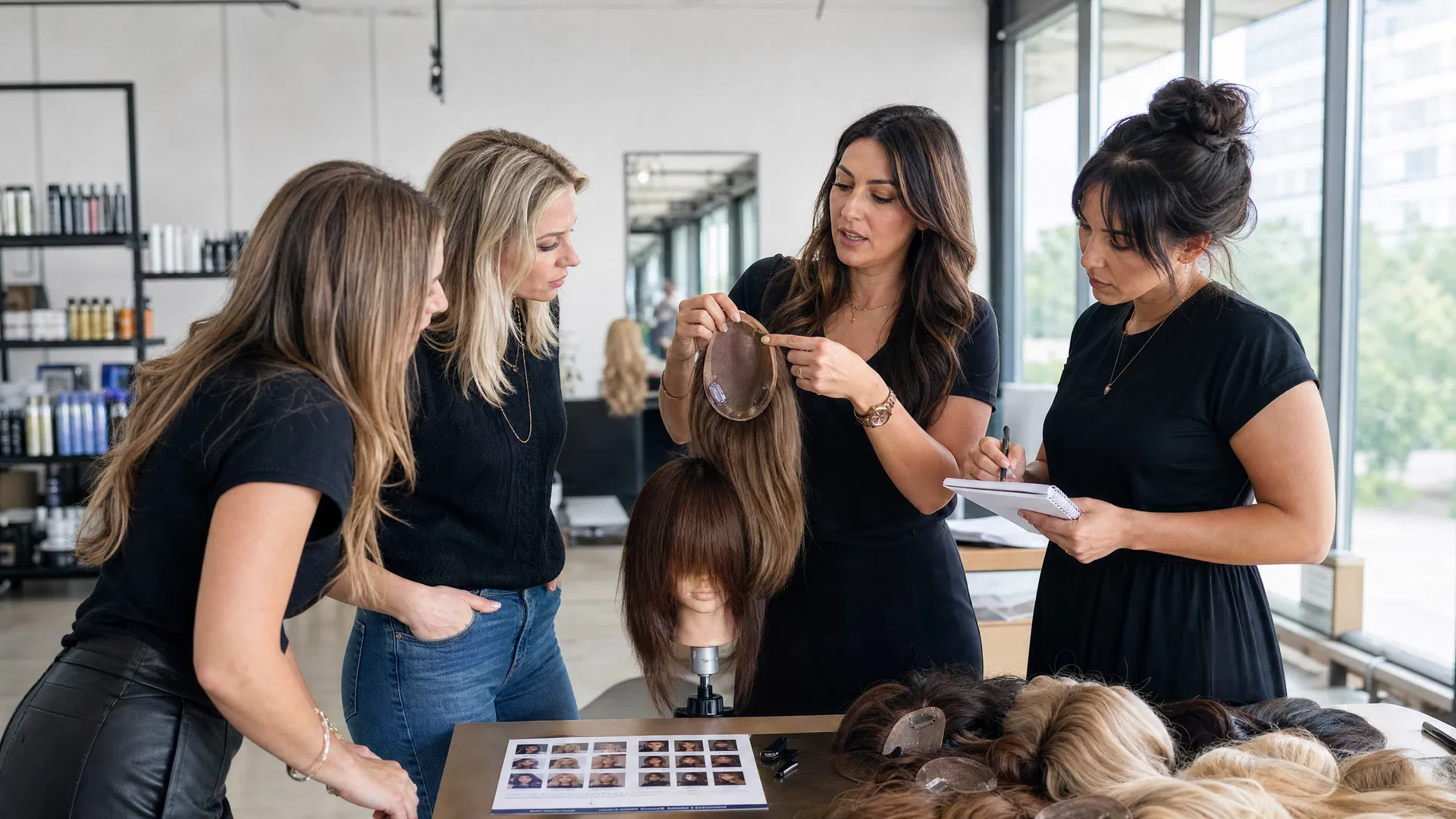
Training is the foundation. Hair loss integration requires specific technical skills — reading scalp density, selecting the right method for each client's loss pattern, applying toppers and wefts in ways that protect fragile follicles, and conducting consultations with sensitivity and clinical precision. These skills are not transferable from general extension training. A dedicated hair loss integration class is the fastest and most reliable path to competence.
The right hair matters more in this specialty than in any other. Hair loss clients have fine, compromised natural hair — which means the extension or topper hair needs to match in strand diameter, texture, and color with exceptional precision. Remy human hair, and specifically European-sourced Remy hair, is the professional standard for hair loss integration because its finer strand diameter blends seamlessly with fine natural hair in a way that coarser Asian-sourced hair cannot.
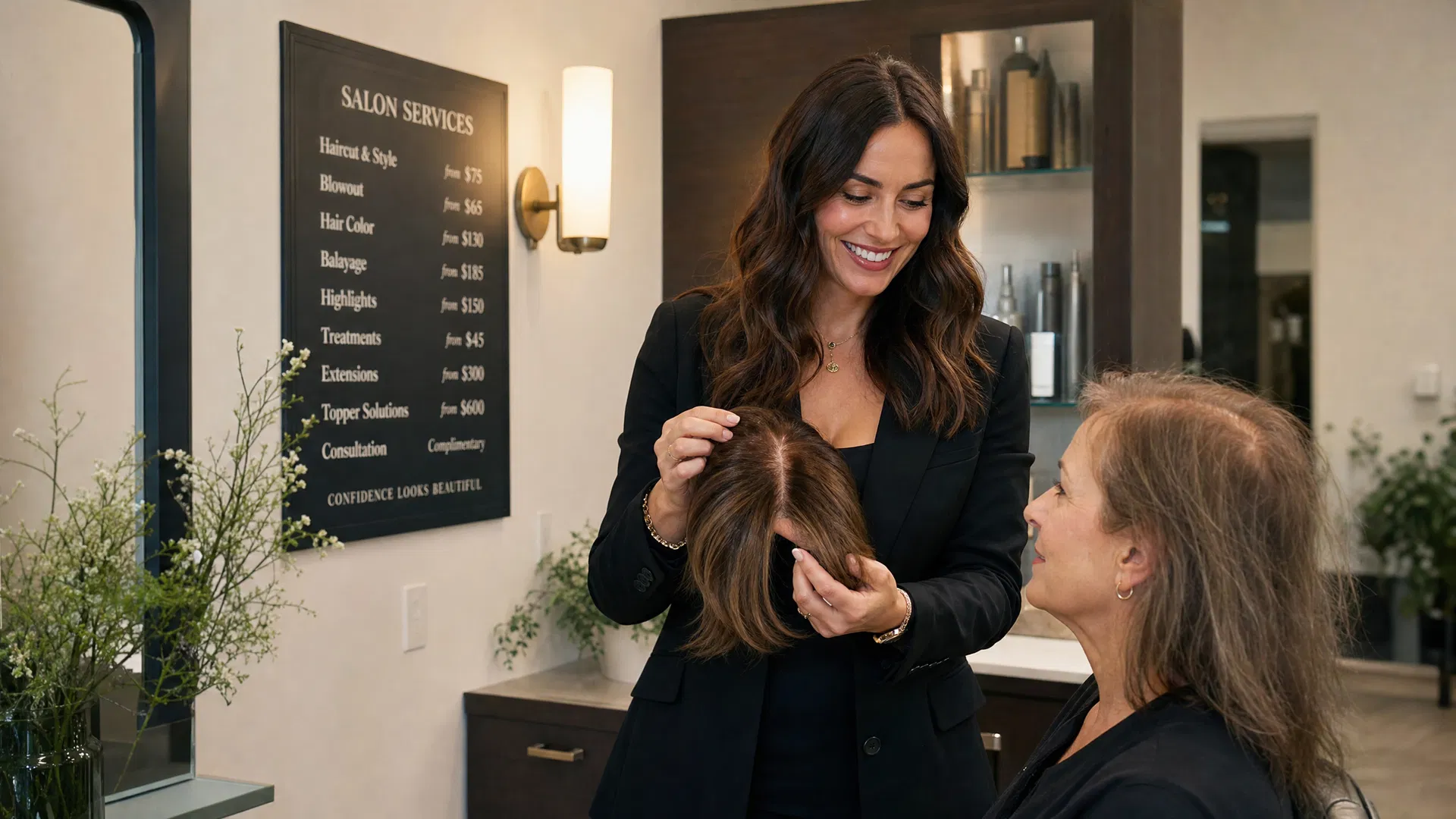
A consultation framework is what separates stylists who build a successful integration practice from those who struggle. The consultation is where you assess the client's loss pattern, select the right method, set realistic expectations, and build the trust that makes the relationship work. A structured consultation process — including an intake form, a physical assessment protocol, and a clear way to discuss investment and maintenance — is the professional infrastructure that makes this specialty sustainable.
How to Get Started
The most direct path to adding hair loss integration to your service menu is a professional certification class. A well-structured two-day class gives you the technical skills, the consultation framework, the business tools, and the hands-on practice you need to begin serving clients immediately upon returning to the salon.
When evaluating classes, look for a program that covers all three integration methods (not just one), is taught by an active practitioner with a real hair loss integration practice, keeps class sizes small enough for individual coaching, and includes the supplies you need to practice during and after the class.
The Zora Hair Loss Integration and Hair Topper Masterclass is a two-day, in-person certification class for licensed cosmetologists covering all three methods with hands-on practice and live coaching from Krista Abad. Class dates are to be announced. View course details and education updates.
Zora Hair Education
Hair Loss Integration Masterclass
A two-day hands-on certification for licensed cosmetologists. Learn all three integration methods — beaded topper, meshless, and mesh — with live coaching from Krista Abad. Dates to be announced.
Keywords
Professional Access
Questions about Zora Hair?
Contact hello@zorahair.com for current product information. Program details and purchasing terms will be announced.
Professional Inquiries