Hair Topper Certification Class for Stylists: What to Expect
Everything licensed cosmetologists need to know before enrolling in a professional hair topper certification class — curriculum, format, what to look for, and the business case.
What Is a Hair Topper Certification Class?
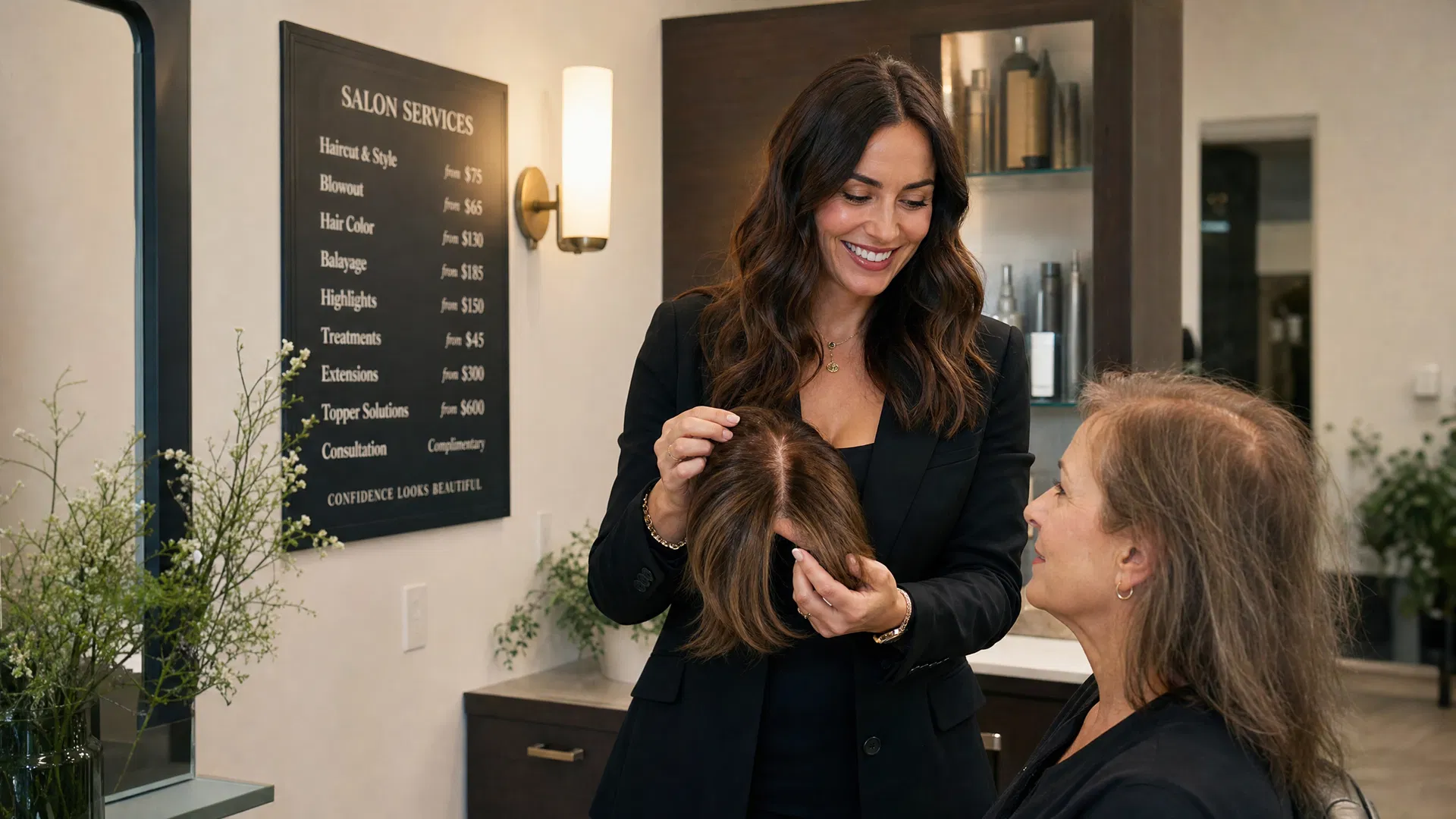
A hair topper certification class is a professional training program that teaches licensed cosmetologists how to fit, apply, and maintain hair toppers for clients with thinning hair, alopecia, or hair loss. Unlike general extension training, a topper class focuses specifically on the unique anatomy of hair loss — how to assess density, coverage area, and scalp health — and how to select and apply a topper that integrates seamlessly with the client's existing hair.
A stylist with relevant training can help clients explore cosmetic coverage while recognizing when medical evaluation is needed. A course should teach both technical skills and the limits of salon services.
What You Learn in a Professional Hair Topper Class
A well-structured hair topper certification class covers far more than application technique. The curriculum should include:
- Hair loss assessment: How to evaluate the client's loss pattern, density, and scalp condition to determine whether a topper is the right solution and which base size and coverage area is appropriate.
- Topper selection: How to match base size, hair color, texture, and length to the client's natural hair. This includes shade matching, strand diameter matching for fine-hair clients, and understanding the difference between synthetic and human hair toppers.
- Application methods: The primary application methods — clip-in, beaded attachment, and sewn attachment — each have different use cases, maintenance schedules, and client profiles. A professional class teaches all three.
- Client consultation: How to conduct a hair loss consultation with sensitivity and clinical precision. This includes intake forms, expectation setting, maintenance scheduling, and how to discuss investment with a client who may be emotionally vulnerable.
- Maintenance and move-up appointments: How to schedule and execute maintenance appointments, how to clean and recondition toppers, and how to identify when a topper needs to be replaced.
- Business integration: How to price topper services, how to build a topper menu, and how to market this specialty to attract the right clients.
Who Should Attend a Hair Topper Certification Class?
A professional hair topper class is designed for licensed cosmetologists who want to expand their service menu into the hair loss and hair enhancement category. You do not need prior topper experience to attend — the class is structured to teach the foundations from the ground up. What you do need is a valid cosmetology license and a genuine interest in serving clients who are dealing with hair loss.
This specialty is particularly valuable for stylists who already have a clientele of women over 40, clients with fine or thinning hair, or clients who have mentioned hair loss concerns during appointments. These clients are already in your chair — a topper certification gives you the skills to serve them at a higher level and generate significantly more revenue per client.
What to Expect from a Two-Day Hands-On Format
The most effective hair topper certification classes are structured as two-day, in-person, hands-on programs. Here is what a well-designed two-day format looks like:
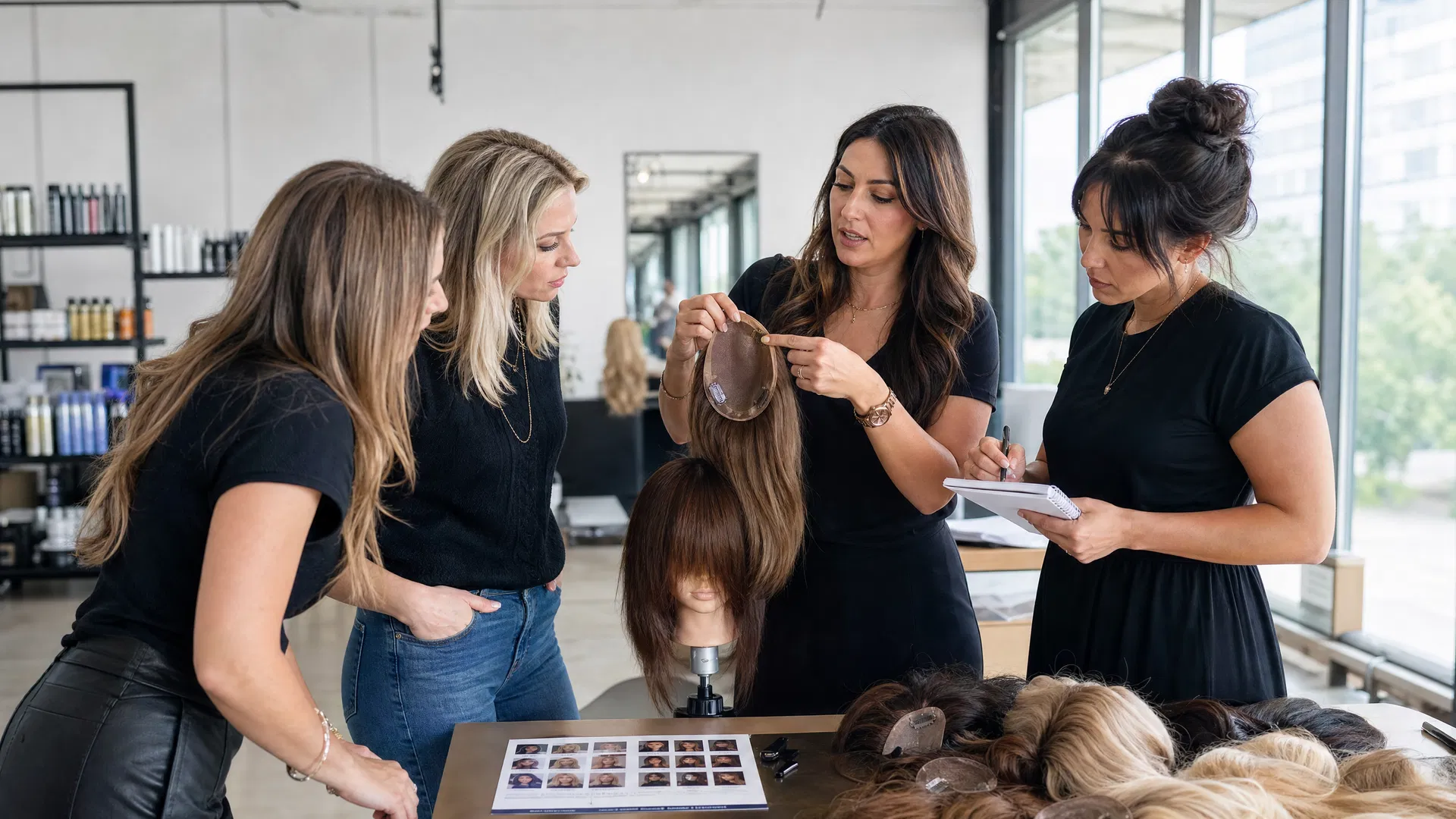
Day 1 typically covers the foundational knowledge: hair loss anatomy, topper selection criteria, shade and texture matching, and the consultation framework. The afternoon of Day 1 moves into hands-on practice — students work on mannequin heads with direct coaching from the instructor. The goal of Day 1 is to understand the why behind every decision before executing the how.
Day 2 is almost entirely hands-on. Students practice all three application methods, receive individual corrections, and work through real-world scenarios — including how to handle a client whose topper does not integrate well on the first attempt. Day 2 ends with a certificate of completion and, in the best programs, a structured debrief on how to implement the service immediately upon returning to the salon.
The hands-on format is non-negotiable for this specialty. Hair loss integration requires tactile skill — reading scalp density, placing clips or beads with precision, and blending topper hair with fine natural hair. These skills cannot be learned from a video or a manual. They require practice, correction, and repetition under the guidance of an experienced instructor.
What to Look for When Choosing a Hair Topper Class
Not all topper certification classes are equal. Here is what distinguishes a professional-grade program from a basic workshop:
- Instructor experience: The instructor should be an active practitioner with a documented hair loss integration practice — not someone who learned the technique recently and is now teaching it. Ask how many topper clients they currently serve and how long they have been specializing in this area.
- Class size: Smaller class sizes mean more individual attention and more hands-on practice time. A class of 6–10 students allows the instructor to work with each student individually. Classes of 20+ students typically mean less coaching and more observation.
- Curriculum depth: The class should cover consultation, selection, all primary application methods, and maintenance — not just one technique. A single-method class leaves you underprepared for the full range of clients you will encounter.
- Included materials: A professional class should include the supplies you need to practice during the class and to begin practicing immediately after. Look for programs that include a topper, mannequin head, and application supplies in the enrollment fee.
- Post-class support: The best programs offer some form of post-class access to the instructor — whether through a graduate community, a follow-up call, or ongoing education resources. The first few clients after certification are where most stylists have questions, and access to support during that period is invaluable.
The Business Case for Adding Topper Services
Confirm the maintenance schedule, expected wear period, removal procedure and reuse conditions for the exact product. Plan appointments and costs from that confirmed guidance and the individual consultation, rather than assuming a fixed service life or repeat interval.
The client retention rate for topper clients is also significantly higher than for general hair services. A client who finds a stylist who understands their hair loss and delivers a result that genuinely improves their confidence does not leave. They refer their friends, their sisters, and their mothers. The topper specialty creates a client relationship that is fundamentally different from a color or cut appointment — it is built on trust, expertise, and a result that matters deeply to the client.
The Zora Hair Loss Integration and Topper Masterclass
Zora’s professional education focuses on beaded topper, meshless integration and mesh integration methods. Contact Zora through the education page for current format, dates and course details.
Zora’s education focuses on beaded topper, meshless integration and mesh integration methods for licensed cosmetologists. Visit the education page or contact Zora for current dates, format, materials and completion requirements.
Class dates are to be announced. Stylists attend from across the country. View course details and education updates.
Zora Hair Education
Professional Hair Education
Explore professional education with Zora, including consultation, topper placement and hair integration techniques. Contact our team for current training information.
Keywords
Professional Access
Questions about Zora Hair?
Contact hello@zorahair.com for current product information. Our team can help with product selection and professional inquiries.
Professional Inquiries