Should I Get a Hair Topper or a Wig for Hair Loss?
The most honest answer to 'should I get a hair topper or a wig for hair loss' depends on how much natural hair you still have, where you are losing it, and how you want to wear your hair going forward. This expert guide walks through the real differences so you can make the right decision for your specific situation.
The most honest answer to "should I get a hair topper or a wig for hair loss" is this: it depends on how much of your natural hair you still have, where you are losing it, and how you want to wear your hair going forward. This guide will walk you through the real differences — not the marketing version — so you can make the right decision for your specific situation.
Both toppers and wigs are legitimate, effective solutions for hair loss. Neither is universally better. The right choice depends on your hair loss pattern, your lifestyle, your budget, and your long-term goals. A trained specialist can assess your specific situation, but this guide will give you the framework to understand your options before that conversation.
What Is a Hair Topper?
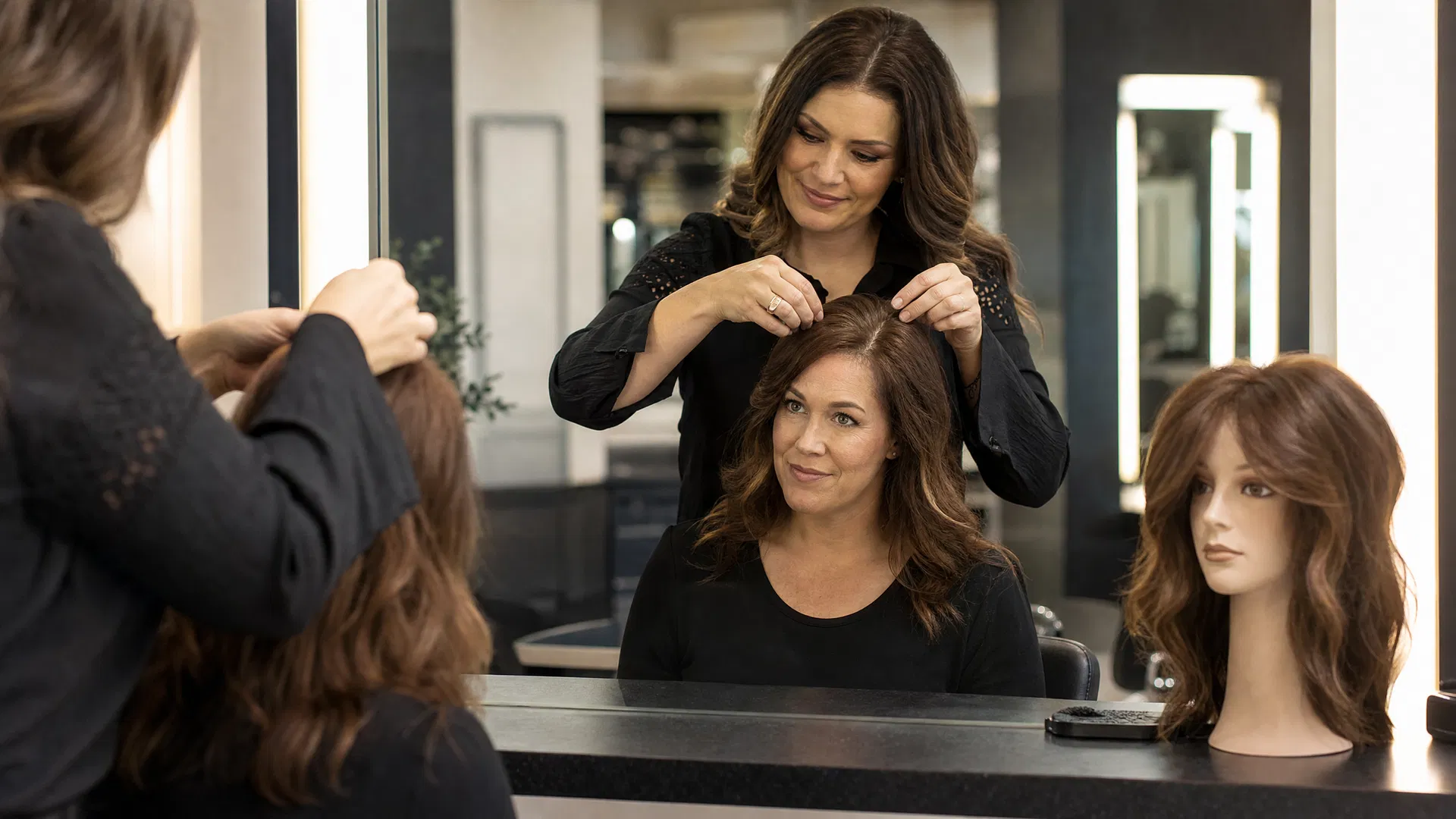
A hair topper is a partial hairpiece designed to cover a specific area of the scalp — most commonly the crown, the part line, or the top of the head. It attaches to your existing hair using pressure-sensitive clips, and it blends with your natural hair at the sides and back.
Toppers are designed for women who have thinning or loss in a defined area but still have enough natural hair around the perimeter to blend with the topper. The natural hair acts as the frame; the topper fills in the coverage area.
The key advantage of a topper is that it works with your natural hair rather than replacing it entirely. When properly matched and fitted, a high-quality topper is virtually undetectable. You can style it, wash it, and wear it like your own hair.
What Is a Wig?
A wig is a full hairpiece that covers the entire scalp. It replaces all visible hair — your natural hair is tucked underneath, and the wig sits on top of the scalp using adhesive, suction, or adjustable straps.
Wigs are designed for women who have significant or total hair loss across the scalp, or who want a complete hair transformation. They offer the most coverage and the most styling flexibility, since the entire look can be changed.
The tradeoff is that wigs require more maintenance, more secure attachment, and more adjustment to feel natural in daily wear. For women with partial hair loss who still have healthy hair around the perimeter, a wig covers more than necessary and may feel heavier or less natural than a topper.
Hair Topper vs. Wig: The Key Differences
| Factor | Hair Topper | Full Wig |
|---|---|---|
| Coverage area | Partial (crown, part line) | Full scalp |
| Best for | Partial or localized hair loss | Extensive or total hair loss |
| Attachment | Clips to existing hair | Adhesive, suction, or straps |
| Natural hair used | Yes — blends with perimeter hair | No — all hair is tucked under |
| Weight | Lighter | Heavier |
| Daily comfort | Generally higher | Varies by construction |
| Styling flexibility | Moderate | High |
| Price range | Lower to moderate | Moderate to high |
Who Is a Hair Topper Right For?
A hair topper is the right choice when hair loss is concentrated in a defined area — most commonly the crown, the top of the head, or the part line — and you still have natural hair around the sides and back that can blend with the topper.
Common situations where a topper is the better choice:
- Female pattern hair loss (androgenetic alopecia) affecting the crown
- Postpartum hair shedding concentrated at the top of the scalp
- Thinning at the part line from years of tight styling
- Alopecia areata with localized patches in the crown area
- Diffuse thinning at the top with relatively full sides and back
The key requirement for a topper is that you have enough natural hair around the perimeter — sides, nape, and front hairline — to blend with the topper and provide attachment points for the clips. If you can pull your hair into a low ponytail and the sides and nape look reasonably full, a topper will likely give you a more natural result than a wig.
Who Is a Wig Right For?
A wig is the right choice when hair loss is extensive across the entire scalp, when perimeter hair is too thin to support a topper, or when you want the flexibility to completely change your look.
Common situations where a wig is the better choice:
- Extensive alopecia areata or alopecia totalis
- Chemotherapy-related hair loss
- Diffuse thinning that affects the entire scalp including the perimeter
- Desire for a complete hair transformation without commitment
The Role of Hair Quality
Whether you choose a topper or a wig, the quality of the hair matters more than almost any other factor in determining how natural the result looks and how long it lasts.
Human hair toppers and wigs can be heat-styled, colored (with limitations), and worn with the same products you use on your natural hair. They move naturally because they are natural. Synthetic options have improved significantly, but they still cannot replicate the texture and movement of human hair in daily wear.
Within human hair, the sourcing and construction matter. Cuticle-aligned Remy human hair — where all strands run in the same direction from root to tip — resists tangling, maintains its texture longer, and blends more naturally with existing hair. This is the standard Zora Hair holds for every product in the collection.
The Bottom Line
If you have partial hair loss concentrated in the crown or part line, and you still have natural hair around the perimeter, a hair topper is almost certainly the better choice. It is lighter, more comfortable, more natural in movement, and works with your existing hair rather than replacing it.
If your hair loss is extensive, diffuse across the entire scalp, or you simply want the flexibility of a complete hair transformation, a wig may be the right answer.
The most important step is a consultation with a trained specialist who can assess your specific situation. Zora Hair works exclusively with licensed professionals who are trained in hair loss solutions. To find a certified Zora stylist near you, visit the Zora Hair stylist directory.
If you are ready to explore toppers specifically, the Zora Hair topper collection is a good place to start. Every topper is available in 25 shades — including 8 blended and rooted options — and is designed to be fitted and matched by a trained specialist for the most natural result possible.
Keywords
Professional Access
Questions about Zora Hair?
Contact hello@zorahair.com for current product information. Program details and purchasing terms will be announced.
Professional Inquiries